Hydrochloric Acid → HCID 19073317, compound
Reaction equation

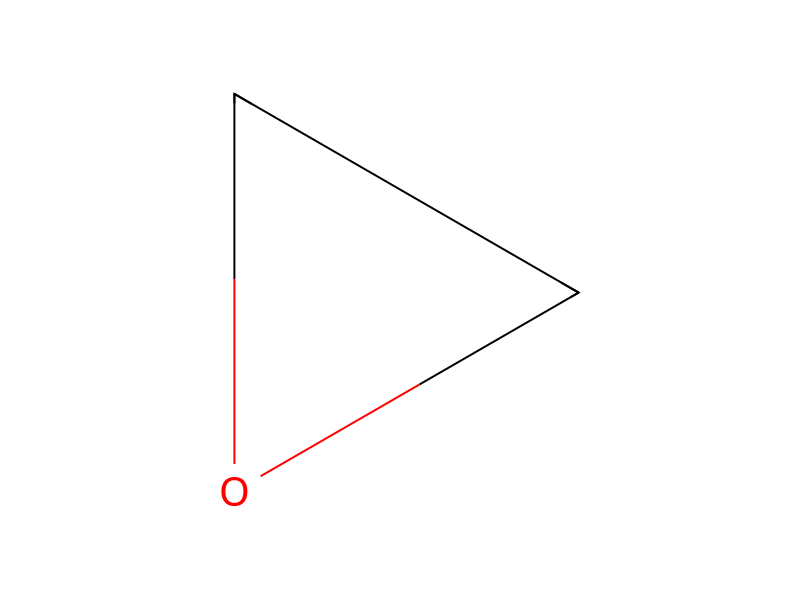
[CH2:1]([NH:5][CH:6]1[CH2:11][C:10]([CH3:13])([CH3:12])[NH:9][C:8]([CH3:15])([CH3:14])[CH2:7]1)[CH2:2][CH2:3][CH3:4].CCC1OC2C=CC(N)=C[C:22]=2[C:20](=[O:21])N1.Cl.[CH2:31]1[O:33][CH2:32]1>CO>[CH2:1]([N:5]([CH:6]1[CH2:7][C:8]([CH3:14])([CH3:15])[N:9]([CH2:31][CH2:32][OH:33])[C:10]([CH3:13])([CH3:12])[CH2:11]1)[CH2:22][CH2:20][OH:21])[CH2:2][CH2:3][CH3:4]Participants
Reactant 4



Product 1

Reagents, catalysts & solvents 1

Conditions
- Temperature
- 150 °C
Procedure
42.47g (0.20 mol) of 4-n-butylamino-2,2,6,6-tetramethylpiperidine [EP-A-302 020, Example 1, page 4], 3 ml of concentrated hydrochloric acid and 300 ml of methanol are placed in a steel autoclave. The autoclave is blanketed with nitrogen. Then 26.5 g (0.60 mol) of ethylene oxide are introduced under pressure and the whole reaction mixture is heated to 150° C. The pressure is 10 bar. After 30 hours the reaction mixture is cooled to room temperature. Then c. 250 ml of methanol are distilled off and the residue is poured into an aqueous saturated solution of sodium hydrogencarbonate. After 3 extractions with ethyl acetate, the organic phases are washed with an aqueous saturated solution of sodium chloride, dried over sodium sulfate, and concentrated on a vacuum rotary evaporator. Chromatography of the residue on silica gel with the solvent system hexane/ethyl acetate 3:1 to 1:1 and ethyl acetate yields 31.5 g (53%) of 2-(n-butyl-[1-(2-hydroxyethyl)-2,2,6,6-tetramethylpiperidin-4-yl]amino)ethanol (compound (201)) as a pale yellow oil. Analysis: calcd: C 67.95%; H 12.08%; N 9.32%; found: C 67.31%; H 11.98%; N 9.10%. ##STR58## α) In accordance with the general procedure of Example 1b), the HALS diol (202) is prepared starting from the known 4-amino-1,2,2,6,6-pentamethylpiperidine [Beilstein EII, Vol. 22, page 321] with ethylene oxide; m.p. 57°-64° C. Analysis: calcd: C 65.07%; H 11.70%; N 10.84%; found: C 64.68%; H 11.43%; N 10.69%. ##STR59## β) In accordance with the general procedure of Example 1b), the HALS diol (203) is prepared starting from the known bis(2,2,6,6-tetramethylpiperidin-4-yl)sebacate [®Tinuvin 770, Ciba-Geigy AG, U.S. Pat. No. 4,396,769] with ethylene oxide. Yield: 67%, m.p. 59-62° C., white powder. Analysis: calcd: C 67.57%, H 10.63%; N 4.92%; found: C 67.37%; H 10.67%; N 4.78%. ##STR60## γ) 1.) 99.4 g (0.46 mol) of 4-n-butylamino-2,2,6,6-tetramethylpiperidine [EP-A-302 020, Example 1, page 4] are added dropwise at 15° C., under nitrogen, to a solution of 42.4 g (0.23 mol) of cyanuric chloride in 280 ml of xylene. The reaction mixture is stirred for 30 minutes at room temperature, then heated to c. 55° C., and a solution of 20 g (0.50 mol) of sodium hydroxide in 50 ml of water is added dropwise. When the dropwise addition is complete, the reaction mixture is stirred for a further 30 minutes at 55° C. The aqueous phase is separated, and the mixture is heated to 90° C. Simultaneously, 24 g (0.27 mol) of morpholine and a solution of 10 g (0.25 mol) of sodium hydroxide in 25 ml of water are added dropwise. The water is distilled off as an azeotrope. Then 50 ml of xylene are distilled off under a slight vacuum (115° C./0.7 torr). The reaction mixture is cooled to c. 50° C. and then washed twice with water. The organic phase is filtered over Hyflo. After addition of 50 ml of water and cooling to 5° C., 110 g (82%) of 2-N-morpholino-4,6-bis[N-n-butyl-(2,2,6,6-tetramethylpiperidin-4-yl)amino]-1,3,5-triazine crystallise out as a white powder of m.p. 112°-114° C. Analysis: calcd: C 67.53%; H 10.65%; N 19.09%; found: C 67.28%; H 10.70%; N 19.06%.
Workup
- customthe whole reaction mixture
- temperatureAfter 30 hours the reaction mixture is cooled to room temperature
- distillation250 ml of methanol are distilled off
- additionthe residue is poured into an aqueous saturated solution of sodium hydrogencarbonate
- extractionAfter 3 extractions with ethyl acetate
- washthe organic phases are washed with an aqueous saturated solution of sodium chloride
- dry with materialdried over sodium sulfate
- concentrationconcentrated on a vacuum rotary evaporator
Sources & evidence
- ORD record
- ord-c558e910d5b749b9964d0863c937b38d
- Source dataset
- uspto-grants-1998_07
- Patent number
- US05777008
Reaction notes
Loading…