5-Fluoro-2-nitrophenol → N-(2-hydroxy-4-fluorophenyl)-N'-phenylurea
Reaction equation

[F:1][C:2]1[CH:3]=[CH:4][C:5]([N+:9]([O-])=O)=[C:6]([OH:8])[CH:7]=1.[Sn](Cl)Cl.[C:15](=[O:18])(O)[O-].[Na+]>C(O)C>[OH:8][C:6]1[CH:7]=[C:2]([F:1])[CH:3]=[CH:4][C:5]=1[NH:9][C:15]([NH:9][C:5]1[CH:6]=[CH:7][CH:2]=[CH:3][CH:4]=1)=[O:18]Participants
5
Reactant 3

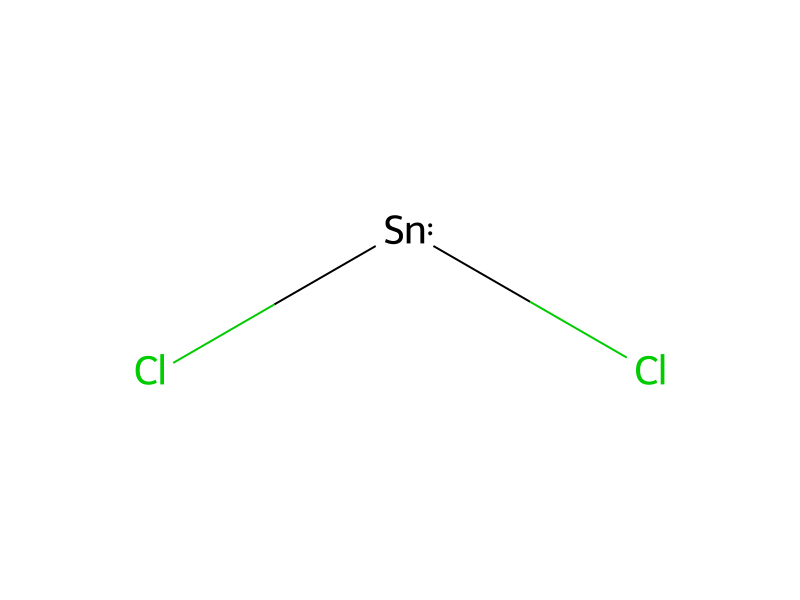

Product 1

Reagents, catalysts & solvents 1

Conditions
- Temperature
- 80 °C
Procedure
A mixture of 5-fluoro-2-nitrophenol (500 mg, 3.18 mmol) and tin (II) chloride (1.76 g, 9.2 mmol) in ethanol (10 mL) was heated at 80° C. under argon. After 30 min, the starting material had disappeared and the solution was allowed to cool down and then poured into ice. The pH was made slightly basic (pH 7-8), by addition of 5% aqueous sodium bicarbonate, before being extracted with ethyl acetate. The organic phase was washed with brine, dried over MgSO4 and filtered. Evaporation of the solvent gave the title compound(335 mg, 83%). 1H NMR (CD3 OD/CDCl3): d 6.6 (m, 1H), 6.38 (dd, 1H, J=8.3 Hz and J=2.8 Hz), 6.29 (m, 1H).
Workup
- temperatureto cool down
- additionpoured into ice
- extractionbefore being extracted with ethyl acetate
- washThe organic phase was washed with brine
- dry with materialdried over MgSO4
- filtrationfiltered
- customEvaporation of the solvent
Sources & evidence
- ORD record
- ord-60aff74847f34c67b5a7fe94bde70699
- Source dataset
- uspto-grants-1998_07
- Patent number
- US05780483
Reaction notes
Loading…