Dichloromethane → HCID 17819319, compound
Reaction equation

[Cl:1][C:2]1[CH:18]=[CH:17][CH:16]=[C:15]([CH3:19])[C:3]=1[CH2:4][NH:5][C:6]1[C:7](=O)[C:8](=[O:13])[C:9]=1[O:10]CC.ClCCl.[C:23]([NH2:27])([CH3:26])([CH3:25])[CH3:24]>>[C:23]([NH:27][C:7]1[C:8](=[O:13])[C:9](=[O:10])[C:6]=1[NH:5][CH2:4][C:3]1[C:15]([CH3:19])=[CH:16][CH:17]=[CH:18][C:2]=1[Cl:1])([CH3:26])([CH3:25])[CH3:24]Participants

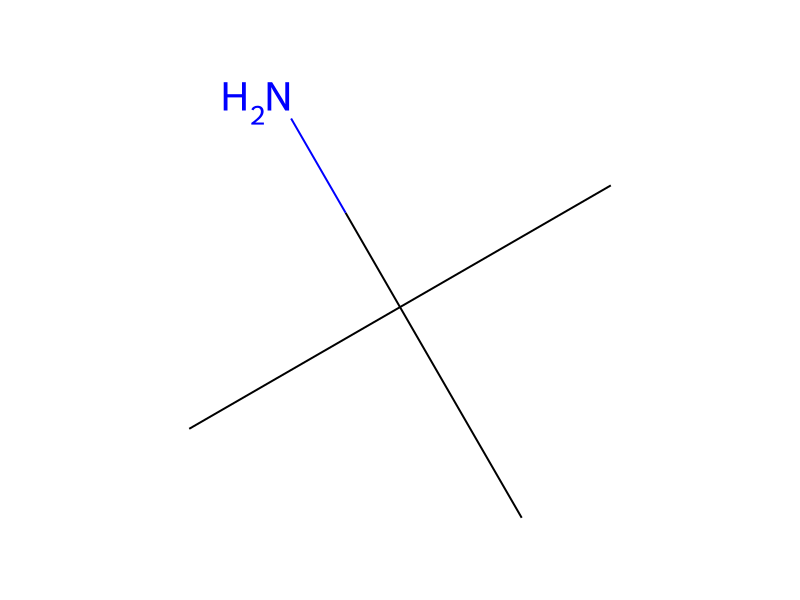


Procedure
A mixture of 3,4-diethoxy-3-cyclobutene-1,2-dione (5 g, 29 mmol) and 2-chloro-6-methylbenzylamine (4.57 g, 29 mmol) in absolute ethanol (147 mL) was allowed to stand at room temperature for 4 days. The reaction mixture was concentrated under reduced pressure and suspended in dichloromethane (200 mL). The slurry was stirred at room temperature for 18 hours, filtered, rinsed with dichloromethane, and concentrated under reduced pressure to give 6.42 g (78%) of a solid. A portion of this solid, 3-(2-chloro-6-methyl-benzylamino)-4-ethoxy-cyclobut-3-ene-1,2-dione, (0.4 g, 1.43 mmol) was placed in t-butylamine (4 mL) and dichloromethane (4 mL) and allowed to stand at room temperature for 6 days. The solid was filtered, rinsed several times with ethyl acetate, and dried. This gave 0.31 g (71%) of the title compound as a white solid: mp 254°-257° C.; 1H NMR (DMSO-d6) δ7.46 (br s, 1H), 7.42 (br t, 1H), 7.38-7.22 (m, 3H), 4.93 (d, 2H), 2.40 (s, 3H), 1.34 (s, 9H) ppm. IR (KBr): 3200, 2960, 1790, 1650 cm-1 ; MS (m/z) 306/308 (M+).
Workup
- filtrationThe solid was filtered
- washrinsed several times with ethyl acetate
- customdried
Sources & evidence
- ORD record
- ord-c89da459f908483fa24cb011bee82517
- Source dataset
- uspto-grants-1998_07
- Patent number
- US05780505
Reaction notes
Loading…