Lactic Acid → Calcium Lactate
Reaction equation

OC(O)=O.[C:5]([OH:10])(=[O:9])[CH:6]([CH3:8])[OH:7].[OH-].[Ca+2:12].[OH-]>>[C:5]([O-:10])(=[O:9])[CH:6]([CH3:8])[OH:7].[Ca+2:12].[C:5]([O-:10])(=[O:9])[CH:6]([CH3:8])[OH:7]Participants
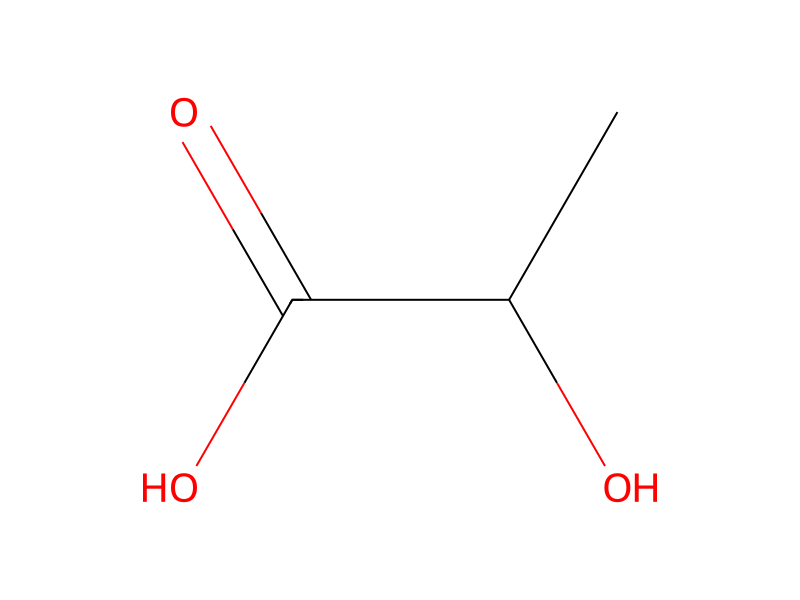


Procedure
When the hydroxycarboxylic acid of the invention is lactic acid, an aqueous solution or suspension of calcium hydroxide is used as an alkaline solution. Isolation of calcium lactate from the aqueous solution obtained by decomposition can be efficiently carried out by using calcium hydroxide. For example, a polymer is added to an aqueous suspension of calcium hydroxide and completely decomposed with stirring at 50~100° C. Unreacted calcium hydroxide is removed from the reaction mixture by such means as filtration. The filtrate is cooled and precipitated calcium lactate is filtered. Calcium lactate thus obtained is dissolved again in water and an equivalent amount of sulfuric acid to calcium is added to the aqueous solution. Precipitated calcium sulfate is filtered off and an aqueous lactic acid solution almost free from calcium can be thus obtained.
Sources & evidence
- ORD record
- ord-cc31453e27214668b3353caa6a12329b
- Source dataset
- uspto-grants-1998_07
- Patent number
- US05780704
Reaction notes
Loading…