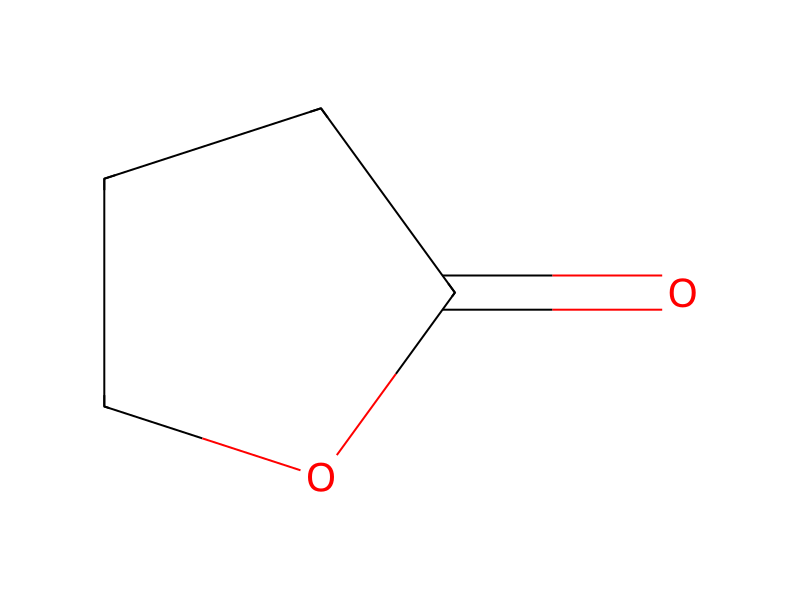
Gamma-Butyrolactone → HCID 131730505, compound
Reaction equation

ClCC1C=CC(CCl)=CC=1.[Cl-].[Al+3].[Cl-].[Cl-].C1(=O)[O:19][CH2:18]CC1.C1C2[C:32](C3C=CC(O)=CC=3)([C:34]3C=[CH:38][C:37]([OH:40])=[CH:36][CH:35]=3)[C:31]3C(=CC=CC=3)C=2C=CC=1>>[CH3:38][C:37]([CH2:36][CH2:35][CH2:34][CH2:32][CH3:31])=[O:40].[CH3:18][OH:19]Participants



Procedure
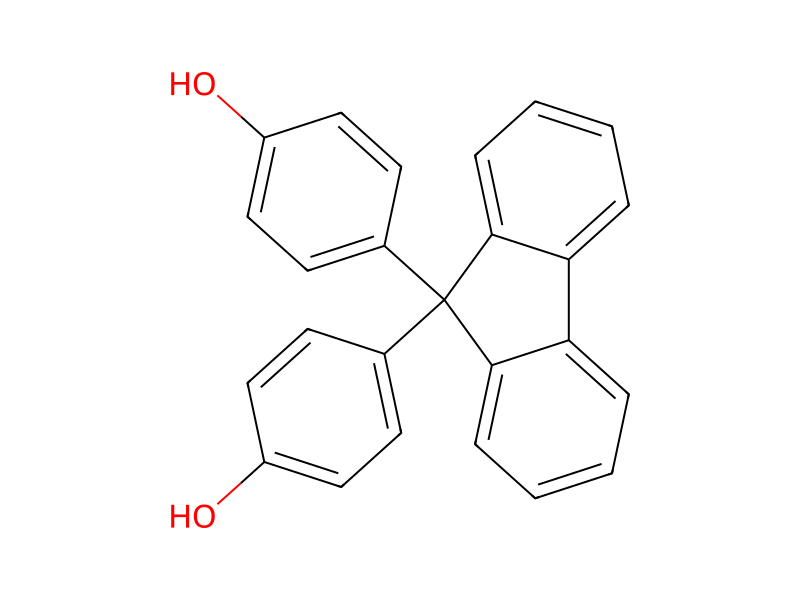
8.75 g (0.05 mol) of α,α′-dichloro-p-xylene, 26.66 g of aluminum chloride, and 200 g of γ-butyrolactone were introduced into 1 l 4-neck flask having a mechanical agitator, a condenser, 300 ml add in a dropwise funnel, and a nitrogen gas inlet and well stirred while flowing nitrogen gas in. After 10 minutes, 35.03 g (0.10 mol) of 4,4′-(9-fluorenylidene)diphenol was dissolved into 200 g of γ-butyrolactone to provide a solution. The solution was slowly dripped for 30 minutes and reacted for 12 hours. After completing the reaction, the acid was removed by using water and condensed by an evaporator. Then it was diluted by using methylamylketone (MAK) and methanol to provide a solution of MAK/methanol=4/1 (weight ratio) having a concentration of 15 wt %. The solution was introduced into 3 l separating funnel and added with n-heptane to removed a low molecular weight-containing monomer to provide a polymer (Mw=12,000, polydispersity=2.0) represented by the following Chemical Formula 11.
Workup
- customflask having
- additiona mechanical agitator, a condenser, 300 ml add in a dropwise funnel, and a nitrogen gas inlet
- customto provide a solution
- waitThe solution was slowly dripped for 30 minutes
- customreacted for 12 hours
- customthe reaction
- customthe acid was removed
- customwater and condensed
- customby an evaporator
- additionThen it was diluted
Sources & evidence
- ORD record
- ord-0f145fef390347e28f30476f34175977
- Source dataset
- uspto-grants-2013_04
- Patent number
- US08415424B2
Reaction notes
Loading…