Riluzole → 3-(Trifluoromethoxy)aniline
Reaction equation

[NH2:1][C:2]1[S:3][C:4]2[CH:10]=[C:9]([O:11][C:12]([F:15])([F:14])[F:13])[CH:8]=[CH:7][C:5]=2[N:6]=1.FC(F)(F)C1C=CC([NH2:22])=CC=1.FC(F)(F)C1C=C(C=CC=1)N.[CH3:38][S:39](C1C=CC(N)=CC=1)(=[O:41])=[O:40].Cl.CS(C1C=C(C=CC=1)N)(=O)=O.CS(C1C=C(C=CC=1)N)(=O)=O.FC(F)(F)OC1C=CC(N)=CC=1.ClC1C=CC=CC=1O.CS(C1C=CC2N=C(N)SC=2C=1)(=O)=O.[S-]C#N.CSC1C=C(C=CC=1)N>>[F:13][C:12]([F:15])([F:14])[O:11][C:9]1[CH:10]=[C:4]([CH:5]=[CH:7][CH:8]=1)[NH2:22].[CH3:38][S:39]([C:8]1[CH:9]=[CH:10][C:4]2[S:3][C:2]([NH2:1])=[N:6][C:5]=2[CH:7]=1)(=[O:41])=[O:40]Participants
Reactant 11
 HCID 5070Riluzole
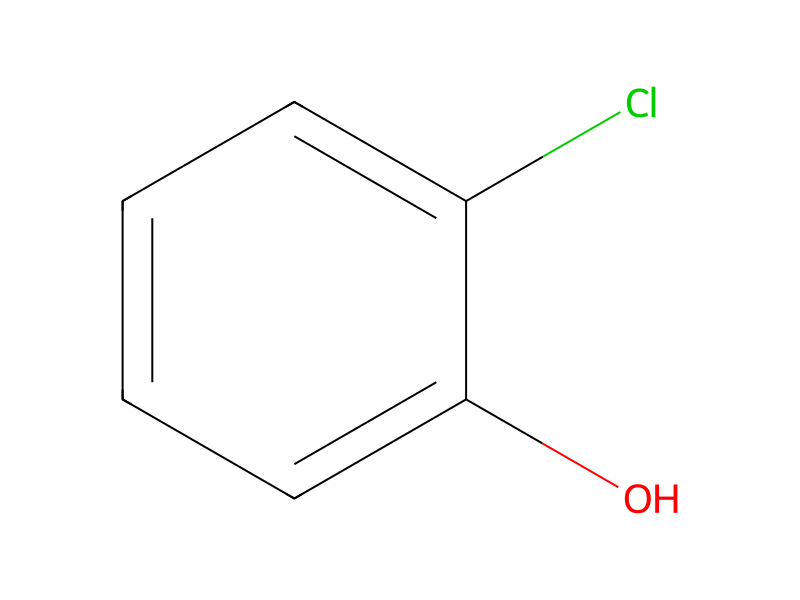 HCID 72452-Chlorophenol
 HCID 73753-(Trifluoromethyl)aniline
 HCID 9322Thiocyanate
 HCID 99644-(Trifluoromethyl)aniline
 HCID 15693Benzenamine, 3-(methylthio)-
 HCID 796174-(Methylsulfonyl)aniline
 HCID 871522-Benzothiazolamine, 6-(methylsulfonyl)-
 HCID 4280293-(Methylsulphonyl)aniline2×
 HCID 6008484-(Trifluoromethoxy)aniline
 HCID 27351793-(Methylsulfonyl)aniline hydrochloride
Product 2


Procedure
The reaction may be conducted in acetonitrile in the presence of benzyltrimethylammonium tribromide (similar to J. Organic Chemistry, 2003, 68, 8693). Alternatively, potassium thiocyanate may be used (similar to Journal of Medicinal Chemistry, 49(2), 664-677; 2006 see also Tetrahedron, 42(20), 5739-46; 1986). The reaction proceeds with good yield, both in the case where the aniline is 4-substituted and 3-substituted, giving rise to 6 and 5-substituted 2-amino-benzothiazoles respectively. 2-amino-6-trifluoromethoxybenzothiazole (RN: 850608-87-6) is a commercially available compound. 4-Trifluoromethylaniline (RN: 455-14-1), 3-trifluoromethylaniline (RN: 9-16-8), 4-methanesulphonylaniline (5470-49-5), 3-methansulphonylaniline hydrochloride (RN: 80213-28-1), 3-methanesulphonylaniline (RN: 352116-39-8), just like 4-trifluoromethoxy aniline (RN: 1535-73-5) are compounds that are commercially available. 3-Trifluoromethoxyaniline (RN: 1535-73-5) is prepared starting from 2-chlorophenol as described in Bulletin de la Societe Chimique de France, (6), 925-9; 1986. 3-Methanesulphonylaniline may also be prepared by nitration of the sulphone followed by reduction of the nitro group, as described in Helvetica Chimica Acta (1981), 64(6), 1849-53. 6-Methanesulphonyl-2-aminobenzothiazole may also be prepared by oxidation of the corresponding 6-thio-methylether-N-BOC-benzoimidazole obtained by reacting with thiocyanate as described above, starting from the commercially available compound 3-methylthioaniline (RN: 1783-81-9). Similar, the corresponding 5-methanesulphonyl-2-aminobenzothiazole may be obtained. The 2-aminobenzothiazoles substituted at positions 5 and 6, described in this invention, may also be obtained by reacting the appropriately substituted 2-thioanilines with bis-carboimidoyl-imidazole (RN: 104619-51-4), similar to as described in Journal of Heterocyclic Chemistry, 40(1), 191-193; 2003, as reported in Scheme 4:
Workup
- customobtained
Sources & evidence
- ORD record
- ord-a7a3aa8b44fa4398854bfc1f4e22a0fc
- Source dataset
- uspto-grants-2013_04
- Patent number
- US08420634B2
Reaction notes
Loading…