Iopromide → 5-Methoxyacetamido-2,4,6-triiodoisophthaloyl chloride
Reaction equation

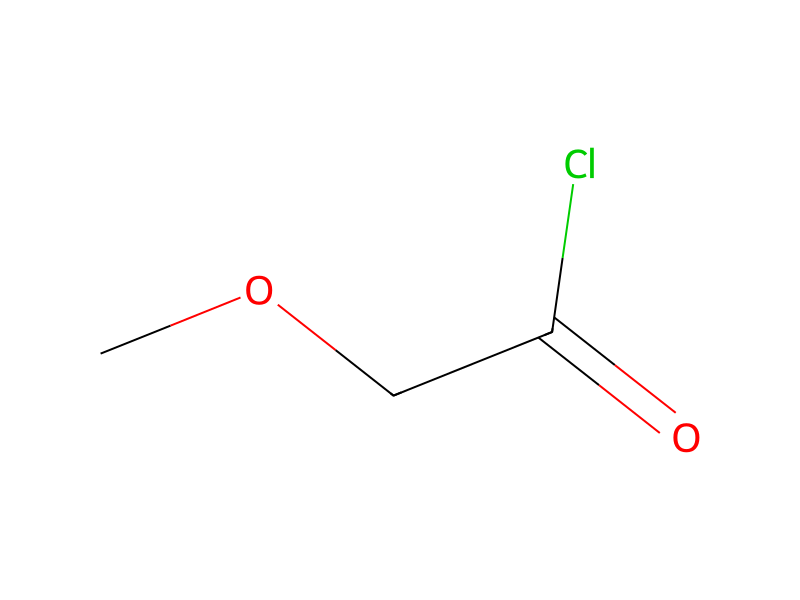
CN(C(C1C(I)=C(N[C:18]([CH2:20][O:21][CH3:22])=[O:19])C(I)=C(C(NCC(O)CO)=O)C=1I)=O)CC(O)CO.[NH2:33][C:34]1[C:35]([I:48])=[C:36]([C:45]([Cl:47])=[O:46])[C:37]([I:44])=[C:38]([C:42]=1[I:43])[C:39]([Cl:41])=[O:40].COCC(Cl)=O>CN(C)C=O>[CH3:22][O:21][CH2:20][C:18]([NH:33][C:34]1[C:42]([I:43])=[C:38]([C:39]([Cl:41])=[O:40])[C:37]([I:44])=[C:36]([C:35]=1[I:48])[C:45]([Cl:47])=[O:46])=[O:19]Participants
5




Procedure
According to the above reaction scheme 1, iopromide of formula (1) is prepared through the steps of reacting 5-amino-2,4,6-triiodoisophthalic acid dichloride of formula (2) with methoxyacetyl chloride in dimethylformamide solvent to produce 5-methoxyacetylamino-2,4,6-triiodoisophthalic acid dichloride of formula (3), and reacting the compound of formula (3) with 2,3-dihydroxypropylamine and in turn with 2,3-dihydroxy-N-methylpropylamine in dimethylformamide solvent in the presence of basic material.
Sources & evidence
- ORD record
- ord-fbaf10347afa4452a1e04ce739e1f86b
- Source dataset
- uspto-grants-2013_04
- Patent number
- US08420858B2
Reaction notes
Loading…