Potassium Carbonate → [3-(4-Bromo-2-formyl-phenoxy)-phenyl]-acetic acid methyl ester
Reaction equation

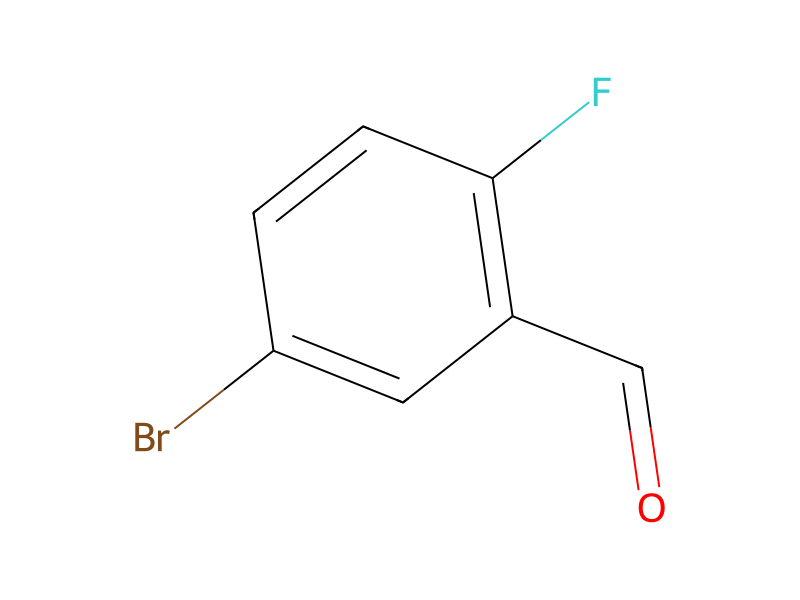
[CH3:1][O:2][C:3](=[O:12])[CH2:4][C:5]1[CH:10]=[CH:9][CH:8]=[C:7]([OH:11])[CH:6]=1.[Br:13][C:14]1[CH:15]=[CH:16][C:17](F)=[C:18]([CH:21]=1)[CH:19]=[O:20].C(=O)([O-])[O-].[K+].[K+]>O1CCOCC1>[CH3:1][O:2][C:3](=[O:12])[CH2:4][C:5]1[CH:10]=[CH:9][CH:8]=[C:7]([O:11][C:17]2[CH:16]=[CH:15][C:14]([Br:13])=[CH:21][C:18]=2[CH:19]=[O:20])[CH:6]=1Participants




Conditions
- Temperature
- 100 °C
Procedure
(3-Hydroxy-phenyl)-acetic acid methyl ester (1.44 g, 8.66 mmol), 5-bromo-2-fluorobenzaldehyde (1.76 g, 8.66 mmol), and potassium carbonate (2.39 g, 17.32 mmol) were combined in 1,4-dioxane (18 mL) and heated to 100° C. overnight. Some starting material was still observed by analytical LCMS, so additional potassium carbonate (0.6 g, 4.3 mmol) was added, and the reaction was stirred at 100° C. for 4 hours. The mixture was cooled to room temperature and partitioned between EtOAc and H2O. Brine was added to facilitate separation, and the aqueous layer was extracted twice with EtOAc. The combined organic layers were dried and concentrated, and the residue was purified by silica gel chromatography (10-30% EtOAc in hexanes) to give the title compound.
Workup
- additionwas added
- temperatureThe mixture was cooled to room temperature
- custompartitioned between EtOAc and H2O
- additionBrine was added
- customseparation
- extractionthe aqueous layer was extracted twice with EtOAc
- customThe combined organic layers were dried
- concentrationconcentrated
- customthe residue was purified by silica gel chromatography (10-30% EtOAc in hexanes)
Sources & evidence
- ORD record
- ord-5b47407bf7c9481e93982fc1d507563a
- Source dataset
- uspto-grants-2013_04
- Patent number
- US08426449B2
Reaction notes
Loading…