Water → 6-bromo-2-(2-fluorobenzyl)-2H-indazol-3-amine
Reaction equation

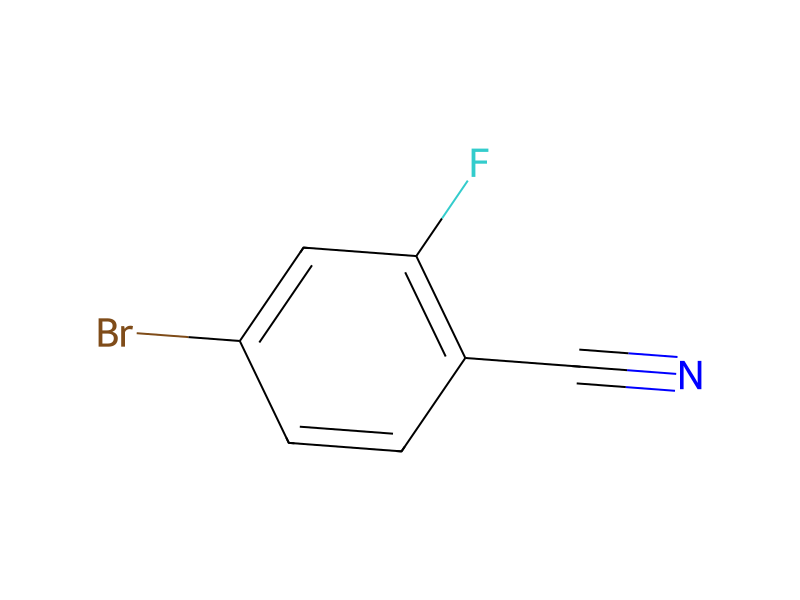
[Br:1][C:2]1[CH:9]=[CH:8][C:5]([C:6]#[N:7])=[C:4](F)[CH:3]=1.C(NC(C)C)(C)C.Cl.Cl.[F:20][C:21]1[CH:29]=[CH:28][CH:27]=[CH:26][C:22]=1[CH2:23][NH:24][NH2:25].O>C(O)CCC.C(OCC)(=O)C>[Br:1][C:2]1[CH:3]=[CH:4][C:5]2[C:8]([CH:9]=1)=[N:25][N:24]([CH2:23][C:22]1[CH:26]=[CH:27][CH:28]=[CH:29][C:21]=1[F:20])[C:6]=2[NH2:7]Participants
Reactant 4



Product 1

Reagents, catalysts & solvents 2


Conditions
- Temperature
- 125 °C
Procedure
To a solution of 4-bromo-2-fluorobenzonitrile (3.19 g, 15.64 mmol) and diisopropylamine (13.16 mL, 93.86 mmol) in n-butanol (70 mL) was added (2-fluorobenzyl)hydrazine dihydrochloride (10 g, 46.93 mmol) and the very thick slurry was heated to 125° C. (the mixture became a cloudy solution at 90° C.) for 18 h. The reaction mixture was poured into water and ethyl acetate. The organic layer was isolated and washed with brine, dried over Na2SO4 and concentrated. The resulting light brown solid was taken up in DCM (60 mL) and the suspension stirred for 15 min and filtered. The filter cake was washed with very little DCM and hexanes and dried on a high vacuum pump to give the product as a light brown solid (1.55 g, 31%). LC-MS [M+H]+=320.3, 322.3, RT=2.33 min.
Workup
- customat 90° C.
- customfor 18 h
- customThe organic layer was isolated
- washwashed with brine
- dry with materialdried over Na2SO4
- concentrationconcentrated
- filtrationfiltered
- washThe filter cake was washed with very little DCM and hexanes
- customdried on a high vacuum pump
Sources & evidence
- ORD record
- ord-81b19fa6b46d4c0c8e49a08ddfeb5141
- Source dataset
- uspto-grants-2013_04
- Patent number
- US08431695B2
Reaction notes
Loading…