Water → Cyclopentanone, 2-(2-oxo-2-phenylethyl)-
Reaction equation

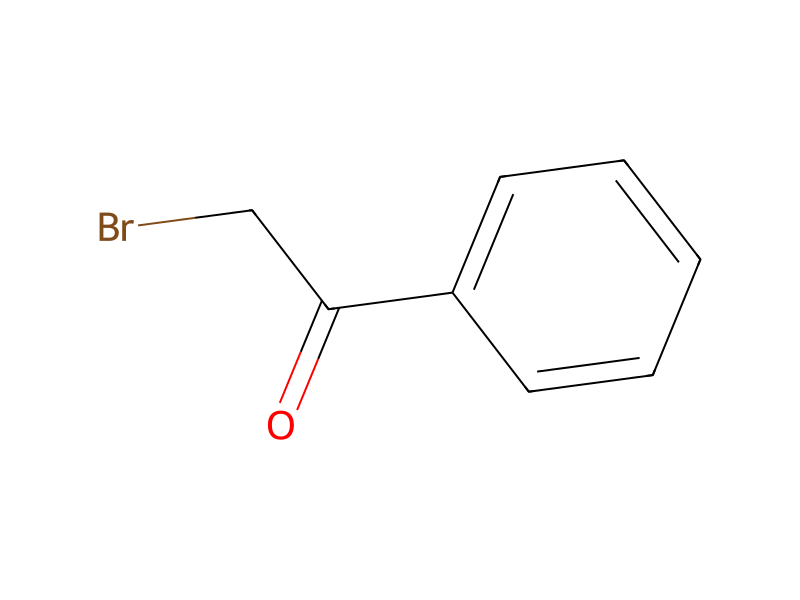
[CH2:1](Br)[C:2]([C:4]1[CH:9]=[CH:8][CH:7]=[CH:6][CH:5]=1)=[O:3].[C:11]1([CH3:17])[CH:16]=[CH:15][CH:14]=CC=1.N1(C2CCCC=2)CCCC1.[OH2:28]>>[CH2:1]([CH:17]1[CH2:14][CH2:15][CH2:16][C:11]1=[O:28])[C:2]([C:4]1[CH:9]=[CH:8][CH:7]=[CH:6][CH:5]=1)=[O:3]Participants
5




Procedure
A solution of 72.4 g (0.36 mole) of phenacyl bromide in 175 ml. of toluene is added dropwise to a stirred boiling solution of 50 g (0.036 mole) of 1-pyrrolidino-1-cyclopentene and 200 ml. of toluene. The reaction mixture is heated under reflux for 3 hours. diluted cautiously with 200 ml. of water, refluxed for 4 hours and cooled. After the layers separate, the aqueous phase is extracted with benzene, and the organic phase is dried and concentrated to an oil. Distillation gives 2-phenacylcyclopentanone as a liquid, b.p. 138°-140° C. (0.05 mm).
Workup
- temperatureThe reaction mixture is heated
- temperatureunder reflux for 3 hours
- additiondiluted cautiously with 200 ml
- temperaturecooled
- customAfter the layers separate
- extractionthe aqueous phase is extracted with benzene
- customthe organic phase is dried
- concentrationconcentrated to an oil
- distillationDistillation
Sources & evidence
- ORD record
- ord-e7e497e72e1e43f4901b79032a6ba84d
- Source dataset
- uspto-grants-1976_12
- Patent number
- US03997557
Reaction notes
Loading…