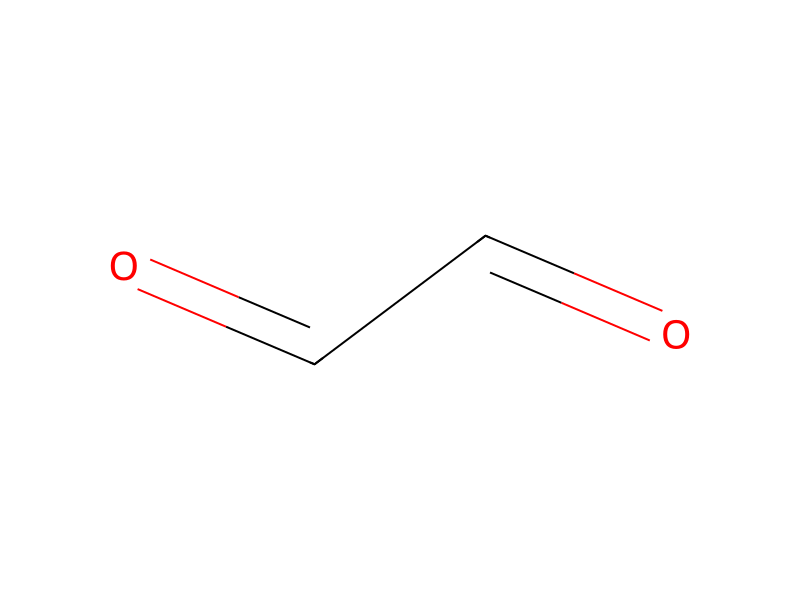
Glyoxal → HCID 19101917, compound
Reaction equation

N[C:2]1[C:11]([NH2:12])=[CH:10][CH:9]=[C:4]([C:5]([O:7][CH3:8])=[O:6])[C:3]=1[C:13]([O:15][CH3:16])=[O:14].C(C=O)=O.O1C[CH2:24][CH2:23][CH2:22]1>O>[N:12]1[C:11]2[C:2](=[C:3]([C:13]([O:15][CH3:16])=[O:14])[C:4]([C:5]([O:7][CH3:8])=[O:6])=[CH:9][CH:10]=2)[CH:24]=[CH:23][CH:22]=1Participants
5
Reactant 3


Product 1

Reagents, catalysts & solvents 1

Procedure
A mixture of dimethyl 3,4-diaminophthalate (11.2 g, 0.05 mol) in tetrahydrofuran is treated with glyoxal (2.9 g, 0.05 mol) in water at reflux temperature, stirred for 4 hours at reflux temperature and overnight at room temperature, and concentrated in vacuo. The resultant residue is partitioned between water and methylene chloride. The organic phase is dried (MgSO4) and concentrated in vacuo to give a brown solid residue. Recrystallization from methanol gives the title product as a pink powder (9.67 g, 78.6%) mp 124°-125° C., identified by H1NMR, C13NMR, and IR spectral analyses.
Workup
- temperatureat reflux temperature
- concentrationconcentrated in vacuo
- customThe resultant residue is partitioned between water and methylene chloride
- dry with materialThe organic phase is dried (MgSO4)
- concentrationconcentrated in vacuo
- customto give a brown solid residue
- customRecrystallization from methanol
Sources & evidence
- ORD record
- ord-c952ba58284f4fbabd0a85edd5a32a67
- Source dataset
- uspto-grants-1994_02
- Patent number
- US05283335
Reaction notes
Loading…