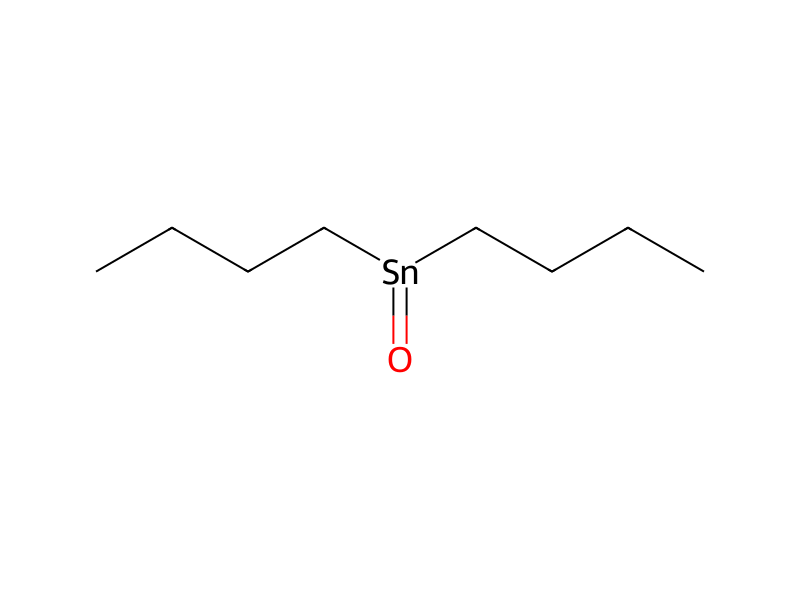
Dibutyltin oxide → HCID 178423709, compound
Reaction equation

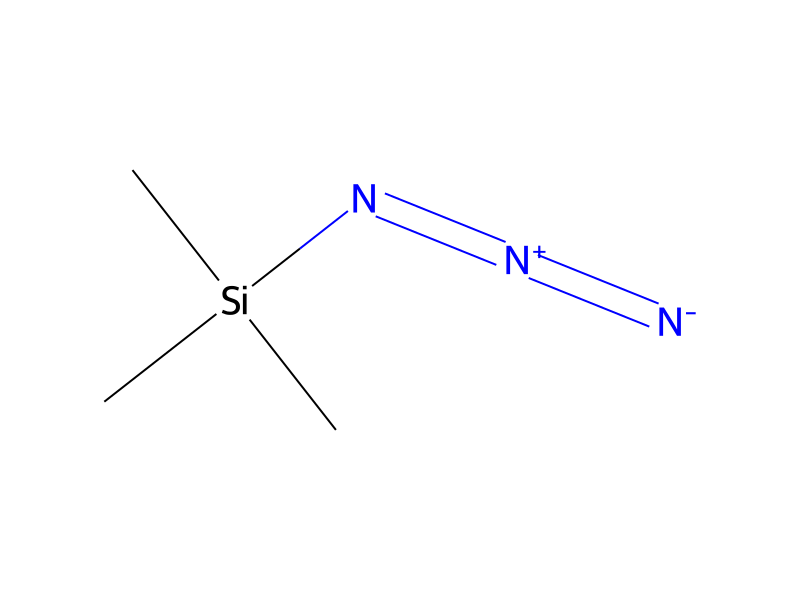
[CH3:1][C:2]1[CH:7]=[CH:6][C:5]([C:8]2[CH:13]=[CH:12][CH:11]=[CH:10][C:9]=2[C:14]#[N:15])=[CH:4][CH:3]=1.C[Si]([N:20]=[N+:21]=[N-:22])(C)C.C([Sn](=O)CCCC)CCC>C1(C)C=CC=CC=1>[CH3:1][C:2]1[CH:3]=[CH:4][C:5]([C:8]2[CH:13]=[CH:12][CH:11]=[CH:10][C:9]=2[C:14]2[NH:22][N:21]=[N:20][N:15]=2)=[CH:6][CH:7]=1Participants
5
Reactant 3

Product 1

Reagents, catalysts & solvents 1

Procedure
To 4-methyl-2'-cyanobiphenyl (53 mg, 0.274 mmol) dissolved in toluene (0.5 mL) was added trimethylsilyl azide (100 μL, 0.73 mmol) and dibutyltin oxide (74 mg, 0.300 mmol). The reaction mixture was heated at ~105° C. for 91 hours, cooled to ambient temperature, concentrated under reduced pressure and flash chromatographed on silica gel eluting with methanol in methylene chloride to give the title compound (61.2 mg). The 300 MHz 1H NMR spectrum was found to be consistent with the desired product.
Workup
- temperatureThe reaction mixture was heated at ~105° C. for 91 hours
- concentrationconcentrated under reduced pressure and flash
- customchromatographed on silica gel eluting with methanol in methylene chloride
Sources & evidence
- ORD record
- ord-18718448bfe74114a16c51cbc2653f85
- Source dataset
- uspto-grants-1994_02
- Patent number
- US05284954
Reaction notes
Loading…