Diethyl Ether → Tetraglyme
Reaction equation

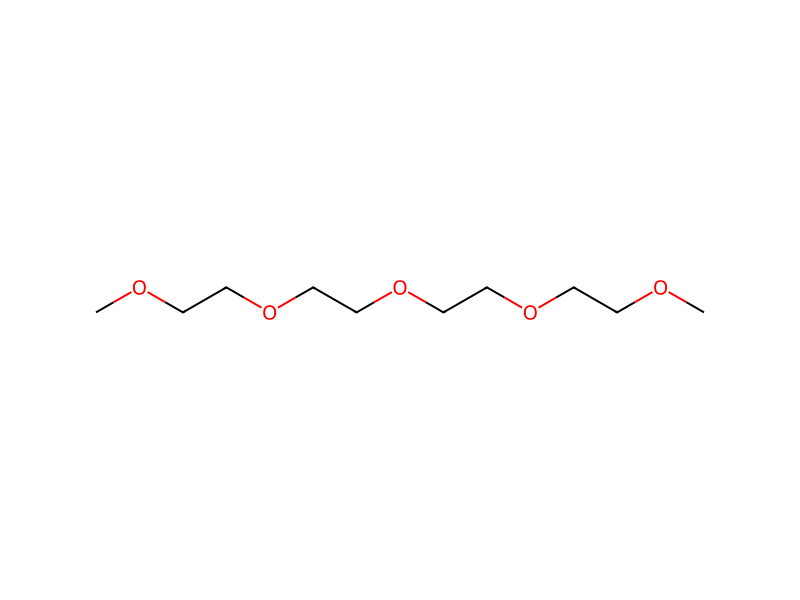
[Cl-].[In+3:2].[Cl-].[Cl-].[CH2:5]([Mg]I)[CH3:6].[CH3:9][O:10][CH2:11][CH2:12][O:13][CH2:14][CH2:15][O:16][CH2:17][CH2:18][O:19][CH2:20][CH2:21][O:22][CH3:23].C(O[CH2:27][CH3:28])C>>[CH2:27]([In:2]([CH2:5][CH3:6])[CH2:20][CH3:21])[CH3:28].[CH3:23][O:22][CH2:21][CH2:20][O:19][CH2:18][CH2:17][O:16][CH2:15][CH2:14][O:13][CH2:12][CH2:11][O:10][CH3:9]Participants
6



Procedure
By a procedure substantially similar to that of Example 3, an adduct of triethyl indium (TEI) and diethyl ether was prepared from indium (III) chloride and ethyl magnesium iodide. To this adduct sufficient tetraglyme was added to give a molar ratio of TEI to tetraglyme was 3:1. Diethyl ether was removed in vacuo at a bottom temperature of 74° C. Subsequently, pure TEI was obtained via dissociation of the adduct at 74°-115° C. and a pressure of <1 mbar. The TEI thereby obtained was subsequently subjected to fractional distillation at a pressure of <1 mbar. No metal impurities could be detected by ICP-OES in the distilled TEI.
Sources & evidence
- ORD record
- ord-b624197f2c6741e58d87e491b5e6b281
- Source dataset
- uspto-grants-1994_02
- Patent number
- US05288885
Reaction notes
Loading…