Triethylamine → 1-(2-Nitrophenyl)-L-proline
Reaction equation

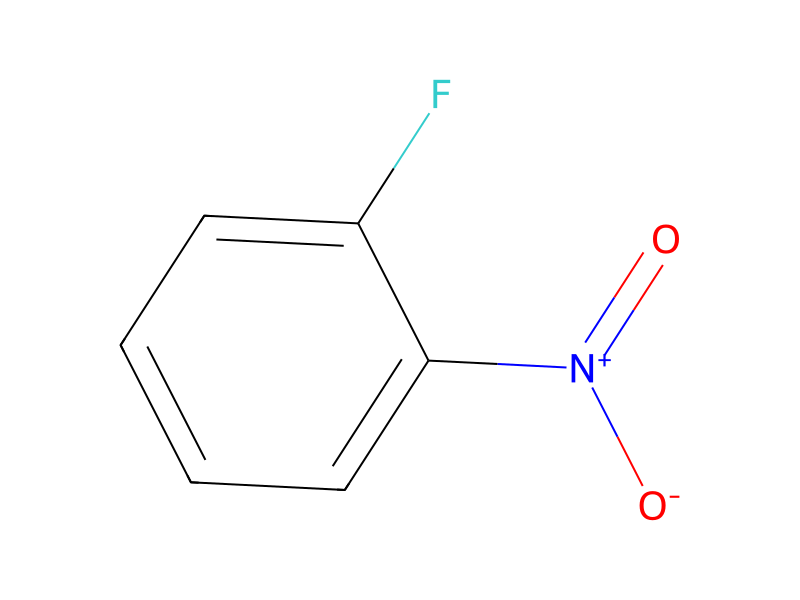
[NH:1]1[CH2:8][CH2:7][CH2:6][C@H:2]1[C:3]([OH:5])=[O:4].F[C:10]1[CH:15]=[CH:14][CH:13]=[CH:12][C:11]=1[N+:16]([O-:18])=[O:17].C(N(CC)CC)C>CS(C)=O>[N+:16]([C:11]1[CH:12]=[CH:13][CH:14]=[CH:15][C:10]=1[N:1]1[CH2:8][CH2:7][CH2:6][C@H:2]1[C:3]([OH:5])=[O:4])([O-:18])=[O:17]Participants
5
Reactant 3


Product 1

Reagents, catalysts & solvents 1

Conditions
- Temperature
- 60 °C
Procedure
There were dissolved, in 25 ml of dimethyl sulfoxide, 1 g of L-proline and 1.23 g of 1-fluoro-2-nitrobenzene, then 1.65 ml of triethylamine was added to the resulting solution and the mixture was stirred with heating at 60° C. for 16 hours. The reaction solution was cooled to room temperature then poured into ice water and washed with ether. The aqueous phase was acidified with hydrochloric acid and extracted with ether. After washing the organic phase with water, the phase was dried over anhydrous magnesium sulfate and then concentrated. The resulting residue was treated by silica gel column chromatography, followed by elution with methanol/chloroform (1/49) to give 1.65 g (yield: 80.3%) of the title compound.
Workup
- temperatureThe reaction solution was cooled to room temperature
- washwashed with ether
- extractionextracted with ether
- washAfter washing the organic phase with water
- dry with materialthe phase was dried over anhydrous magnesium sulfate
- concentrationconcentrated
- additionThe resulting residue was treated by silica gel column chromatography
- washfollowed by elution with methanol/chloroform (1/49)
Sources & evidence
- ORD record
- ord-5a69916ec12d4ce0ab39633c7fb8e452
- Source dataset
- uspto-grants-2001_05
- Patent number
- US06225306B1
Reaction notes
Loading…