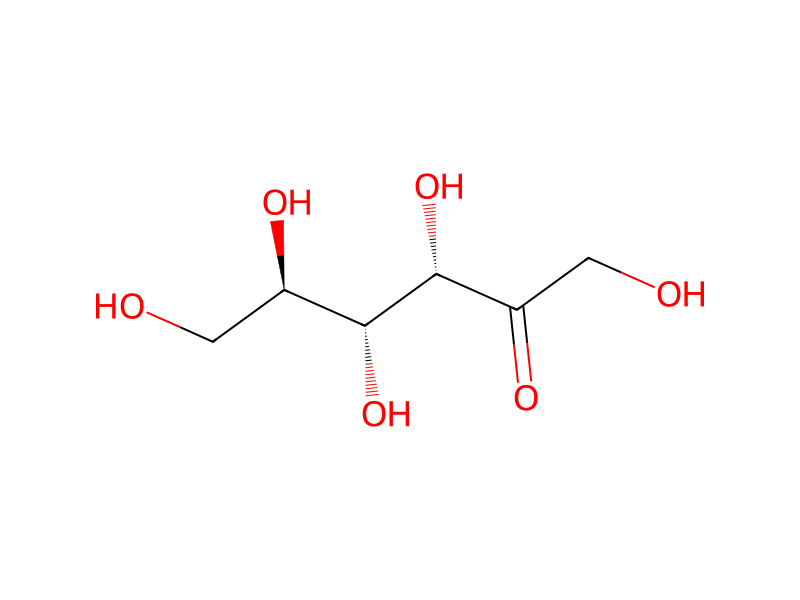
L-Alanine → D-(-)-Fructose
Reaction equation

[C@@H:1]1(N2C3N=CN=C(O)C=3N=C2)[O:9][C@H:6]([CH2:7][OH:8])[C@@H:4]([OH:5])[C@H:2]1[OH:3].[C@@H]1(N2C3N=CN=C(N)C=3N=C2)O[C@H](CO)[C@@H](O)[C@H:21]1[OH:22].N[C@H](C(O)=[O:43])C>>[OH:22][CH2:21][C:7]([C@H:6]([C@@H:4]([C@@H:2]([CH2:1][OH:9])[OH:3])[OH:5])[OH:43])=[O:8]Participants
4


Conditions
- Temperature
- 37 °C
Procedure
FIGS. 4 and 5 show that in the organ preservation model, at 4° C., inosine, adenosine, alanine, and fructose provide substantial protection even up to 24 hours. When the cells are warmed to 37° C., inosine, adenosine, and alanine still afford substantial protection for an extended period of time, while the protection afforded by fructose is diminishing.
Sources & evidence
- ORD record
- ord-a481c3c517094131b71f4e2c47899680
- Source dataset
- uspto-grants-2001_05
- Patent number
- US06232060B1
Reaction notes
Loading…