Trimethyl borate → 4-tert-Butylphenylboronic acid
Reaction equation

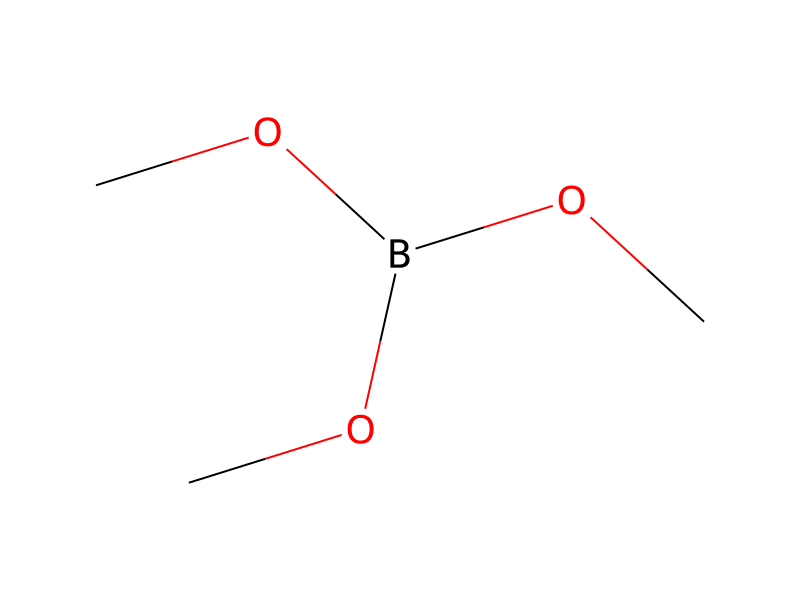
[C:1]([C:5]1[CH:10]=[CH:9][C:8](Br)=[CH:7][CH:6]=1)([CH3:4])([CH3:3])[CH3:2].C([Li])CCC.C[O:18][B:19](OC)[O:20]C>C1COCC1>[C:1]([C:5]1[CH:10]=[CH:9][C:8]([B:19]([OH:20])[OH:18])=[CH:7][CH:6]=1)([CH3:4])([CH3:3])[CH3:2]Participants
Reactant 3
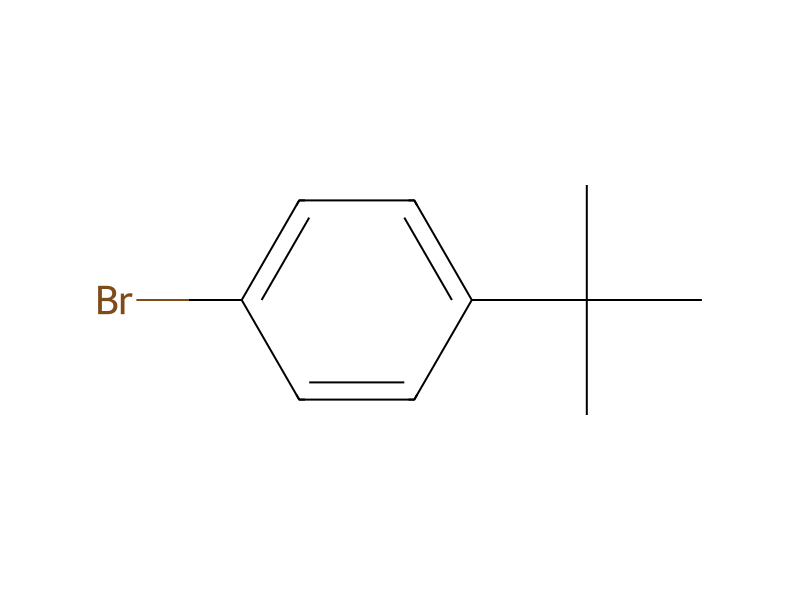

Product 1
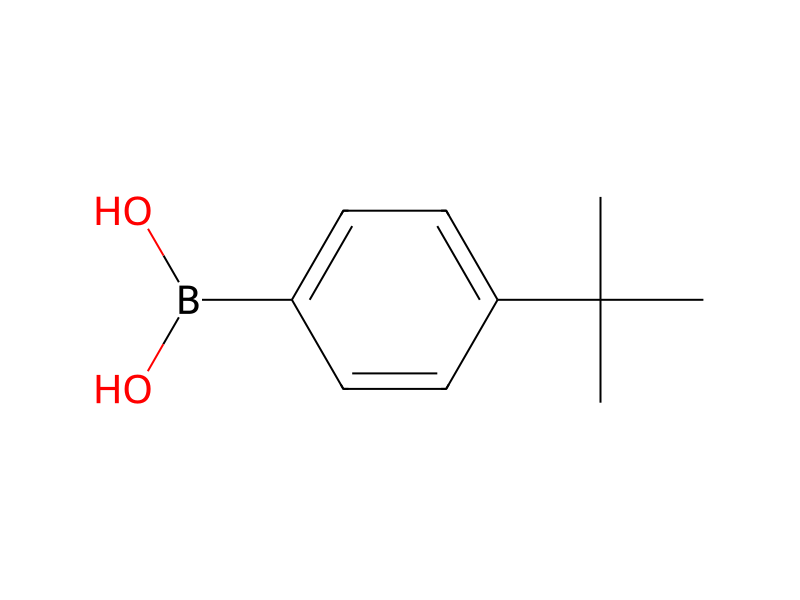
Reagents, catalysts & solvents 1

Procedure
To a stirred solution of 4-tert-butyl-bromobenzene (21.3 g, 0.0999 mol) in THF (30 mL) at −78° C. under nitrogen was added dropwise a 2.1 M solution of n-butyl lithium in hexanes (45 mL, 0.095 mol), and the mixture was stirred for 1.5 hours. To the mixture was added dropwise neat trimethylborate (10.2 mL, 0.090 mol), and the mixture was allowed to slowly warm to room temperature. The mixture was stirred overnight, then quenched by dropwise addition of 1.0 M aqueous hydrochloric acid. Brine was added, and the organic layer was dried (Na2SO4) and rotary evaporated. The residue was crystallized from n-heptane to give 4.65 g of crude 4-tert-butyl-phenyl-boronic acid as white needles. This material was used directly in the next reaction without further characterization. Thus, in a manner similar to Example 12, Step (b), 4-tert-butyl-phenyl-boronic acid (0.4287 g, 0.00241 mol) was allowed to react with 4-(4-bromo-phenyl)-4-oxo-butyric acid, methyl ester (0.5443 g, 0.00200 mol) in the presence of tetrakis(triphenylphosphine)palladium(0) (0.0472 g, 0.0000408 mol) and 2.0 M aqueous sodium carbonate (2.4 mL, 0.0048 mol) in toluene (5 mL) to give, after chromatography on silica gel (270 g, 230-400 mesh), eluting with toluene then chloroform, 0.50 g. The material was dissolved in diethyl ether, washed with 0.10 M aqueous sodium hydroxide, water and brine. The organics were dried (K2CO3), and rotary evaporated to give 0.45 g of 4-(4′-tert-butyl-biphenyl-4-yl)-4-oxo-butyric acid, methyl ester as a white solid; mp 58-62° C.
Workup
- stirringThe mixture was stirred overnight
- customquenched by dropwise addition of 1.0 M aqueous hydrochloric acid
- additionBrine was added
- dry with materialthe organic layer was dried (Na2SO4) and rotary evaporated
- customThe residue was crystallized from n-heptane
Sources & evidence
- ORD record
- ord-49537feb5de9490da06c080cf805dc0f
- Source dataset
- uspto-grants-2001_05
- Patent number
- US06239288B1
Reaction notes
Loading…