1,4-Dibromobenzene → 3,3'-[1,4-Phenylenebis(oxy)]dianiline
Reaction equation

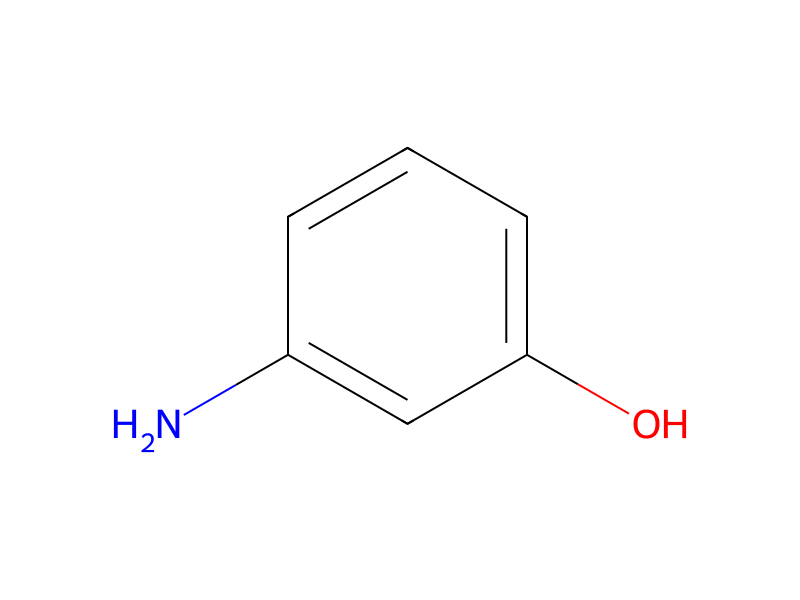
[NH2:1][C:2]1[CH:3]=[C:4]([OH:8])[CH:5]=[CH:6][CH:7]=1.C[O-].[Na+].Br[C:13]1[CH:18]=[CH:17][C:16](Br)=[CH:15][CH:14]=1.[NH2:20][C:21]1[CH:22]=[C:23]([CH:25]=[CH:26][CH:27]=1)[O-:24].[Na+]>CC(N(C)C)=O.CO.N1C=CC=CC=1>[NH2:1][C:2]1[CH:3]=[C:4]([CH:5]=[CH:6][CH:7]=1)[O:8][C:13]1[CH:18]=[CH:17][C:16]([O:24][C:23]2[CH:25]=[CH:26][CH:27]=[C:21]([NH2:20])[CH:22]=2)=[CH:15][CH:14]=1Participants
Reactant 4



Product 1

Reagents, catalysts & solvents 3



Conditions
- Temperature
- 117 °C
Procedure
A 250 mL, 3-necked, round bottom flask fitted with a mechanical stirrer, a still head, a condenser with a nitrogen inlet on the take-off adapter, and a thermometer was charged with 150 mL of pyridine and 21.8 g (0.20 mole) of m-aminophenol. After the m-aminophenol dissolved, 10.8 g (0.20 mole) of sodium methoxide was added. Methanol, formed in this reaction, was distilled off. When the still head temperature reached 110° C., the still head was replaced with a reflux condenser, and 23.6 g (0.10 mole) of p-dibromobenzene and 0.1 g of cuprous chloride were added. The mixture was heated at reflux at 117° C. for 3 hours; 25 mL of DMAc was added to help dissolve sodium m-aminophenoxide formed in the first step. Refluxing was continued for 19 additional hours; the reaction mixture was then cooled to room temperature, filtered to remove inorganic salts, and poured into water. The resulting aqueous solution was extracted with three 300 mL portions of methylene chloride; the extract was dried over magnesium sulfate, decolorized with active carbon, and filtered through diatomaceous earth. Methylene chloride was vacuum-evaporated, and the liquid residue was poured into stirred concentrated hydrochloric acid. The precipitated dihydrochloride of 1,4-bis(3-aminophenoxy)benzene was filtered, washed with concentrated hydrochloric acid, and dried. It then was dissolved in a minimum amount of water containing a small amout of ascorbic acid as antioxidant. The solution was decolorized with activated carbon, filtered through diatomaceous earth, and neutralized with concentrated ammonium hydroxide. The precipitated product was separated by filtration and vacuum-dried overnight at 65° C. The dry diamine weighed 12.4 g (42% yield). Recrystallization from 35 mL of butanol gave 8.6 g of product melting at 98°-99° C., which was distilled bulb-to-bulb to give 6.5 g of colorless 1,4-bis(3,5-aminophenoxy)benzene melting at 99°-100° C.
Workup
- customA 250 mL, 3-necked, round bottom flask fitted with a mechanical stirrer
- distillationwas distilled off
- customreached 110° C.
- customthe still head was replaced with a reflux condenser
- temperatureThe mixture was heated
- customformed in the first step
- temperatureRefluxing
- temperaturethe reaction mixture was then cooled to room temperature
- filtrationfiltered
- customto remove inorganic salts
- additionpoured into water
- extractionThe resulting aqueous solution was extracted with three 300 mL portions of methylene chloride
- dry with materialthe extract was dried over magnesium sulfate
- filtrationfiltered through diatomaceous earth
- customMethylene chloride was vacuum-evaporated
- additionthe liquid residue was poured
- filtrationThe precipitated dihydrochloride of 1,4-bis(3-aminophenoxy)benzene was filtered
- washwashed with concentrated hydrochloric acid
- customdried
- dissolutionIt then was dissolved in a minimum amount of water containing a small amout of ascorbic acid as antioxidant
- filtrationfiltered through diatomaceous earth
- customThe precipitated product was separated by filtration
- customvacuum-dried overnight at 65° C
- customRecrystallization from 35 mL of butanol
Sources & evidence
- ORD record
- ord-ab9ee9260f1a429d96661568c10105ad
- Source dataset
- uspto-grants-1984_11
- Patent number
- US04485140
Reaction notes
Loading…