Benzenesulfonyl chloride → N-benzenesulfonyl-4-(2-bromoethyl) benzenesulfonamide
Reaction equation

[Br:1][CH2:2][CH2:3][C:4]1[CH:9]=[CH:8][C:7]([S:10]([NH2:13])(=[O:12])=[O:11])=[CH:6][CH:5]=1.[C:14]1([S:20](Cl)(=[O:22])=[O:21])[CH:19]=[CH:18][CH:17]=[CH:16][CH:15]=1.[OH-].[Na+]>>[C:14]1([S:20]([NH:13][S:10]([C:7]2[CH:6]=[CH:5][C:4]([CH2:3][CH2:2][Br:1])=[CH:9][CH:8]=2)(=[O:11])=[O:12])(=[O:22])=[O:21])[CH:19]=[CH:18][CH:17]=[CH:16][CH:15]=1Participants
4
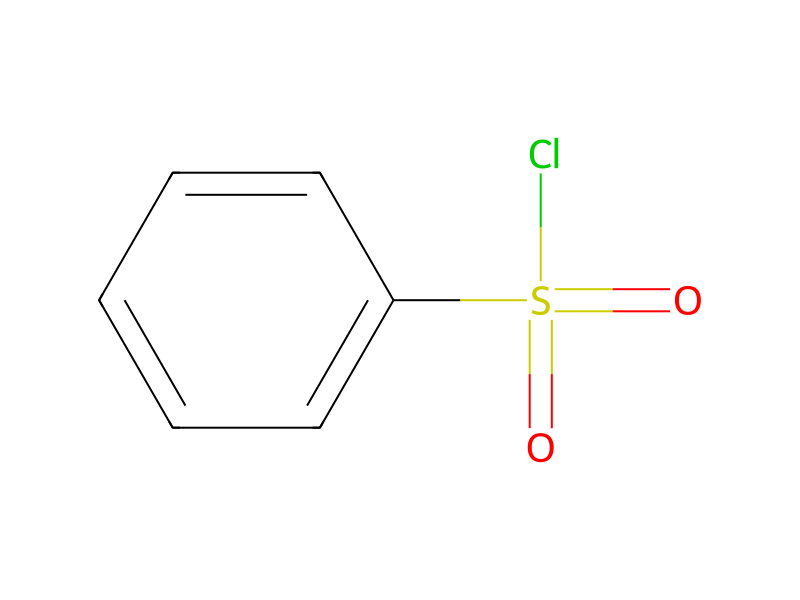



Procedure
As an additional variation of the reaction sequence, the 4-(2-bromoethyl) benzenesulfonamide produced as in Example I was reacted with benzenesulfonyl chloride and sodium hydroxide and then acidified to produce N-benzenesulfonyl-4-(2-bromoethyl) benzenesulfonamide. Recrystallization of a small portion from toluene gave a white solid, having a melting point of 148°-150° C. and a neutralization equivalent of 405 (theory 404).
Sources & evidence
- ORD record
- ord-f192f9618b0c45879ad30df35d6ed0ae
- Source dataset
- uspto-grants-1985_04
- Patent number
- US04510324
Reaction notes
Loading…