Carbon Dioxide → 6-Chloro-7-methylene-3-methyl-1-octen-3-yl acetate
Reaction equation

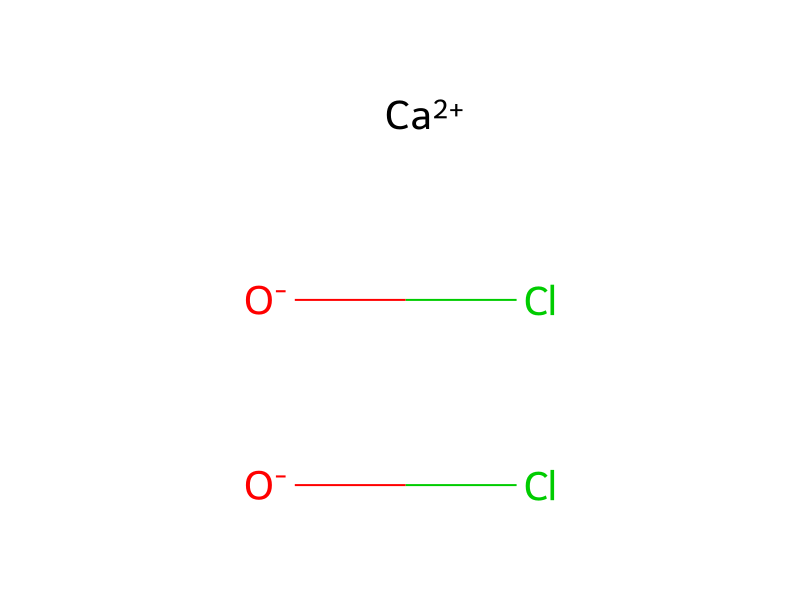
[C:1]([O:4][C:5]([CH2:9][CH2:10][CH:11]=[C:12]([CH3:14])[CH3:13])([CH:7]=[CH2:8])[CH3:6])(=[O:3])[CH3:2].[Cl:15][O-].[Ca+2].Cl[O-].O.C(=O)=O>ClCCl>[C:1]([O:4][C:5]([CH3:6])([CH2:9][CH2:10][CH:11]([Cl:15])[C:12]([CH3:14])=[CH2:13])[CH:7]=[CH2:8])(=[O:3])[CH3:2]Participants
Reactant 4



Product 1

Reagents, catalysts & solvents 1

Conditions
- Temperature
- 10 °C
Procedure
A stirred mixture of linalyl acetate (39 g, 0.2 mol), 65% calcium hypochlorite (22 g, 0.1 mol), water (70 mL) and dichloromethane (700 mL) was cooled to 10° C. and solid carbon dioxide was added until an exotherm was no longer observed upon addition. After stirring for an additional 1 h at 10° C., the organic layer was separated and washed successively with a solution containing 5% sodium bicarbonate and 1% sodium bisulfite (100 mL), and then with brine (100 mL). The organic layer was dried, the solvent evaporated, and the residue distilled to yield 41 g of 3-acetoxy-6-chloro-3,7-dimethyl-1,7-octadiene, bp 75°-80° C. (0.5 mm). IR (film) 1740, 1370, 1250, 920 cm-1. NMR (CDCl3) δ1.53 (3H, s), 1.8 (3H, bs), 1.8-2.4 (2H, m), 4.33 (1H, m), 4.84-5.33 (4H, complex) 6.0 (1H, dd).
Workup
- additionwas no longer observed upon addition
- customthe organic layer was separated
- washwashed successively with a solution
- additioncontaining 5% sodium bicarbonate and 1% sodium bisulfite (100 mL)
- customThe organic layer was dried
- customthe solvent evaporated
- distillationthe residue distilled
Sources & evidence
- ORD record
- ord-876afbfc82ee492490bd062be24fc2a3
- Source dataset
- uspto-grants-1985_04
- Patent number
- US04510319
Reaction notes
Loading…