Chloroacetyl chloride → 6-(2-Chloroacetyl)-1,2,3,4-tetrahydroquinolin-2-one
Reaction equation

[NH:1]1[C:11]2[C:6](=[CH:7][CH:8]=[CH:9][CH:10]=2)[CH2:5][CH2:4][C:2]1=[O:3].[Cl:12][CH2:13][C:14](Cl)=[O:15].[Cl-].[Al+3].[Cl-].[Cl-]>C(=S)=S>[Cl:12][CH2:13][C:14]([C:8]1[CH:7]=[C:6]2[C:11](=[CH:10][CH:9]=1)[NH:1][C:2](=[O:3])[CH2:4][CH2:5]2)=[O:15]Participants
Reactant 3

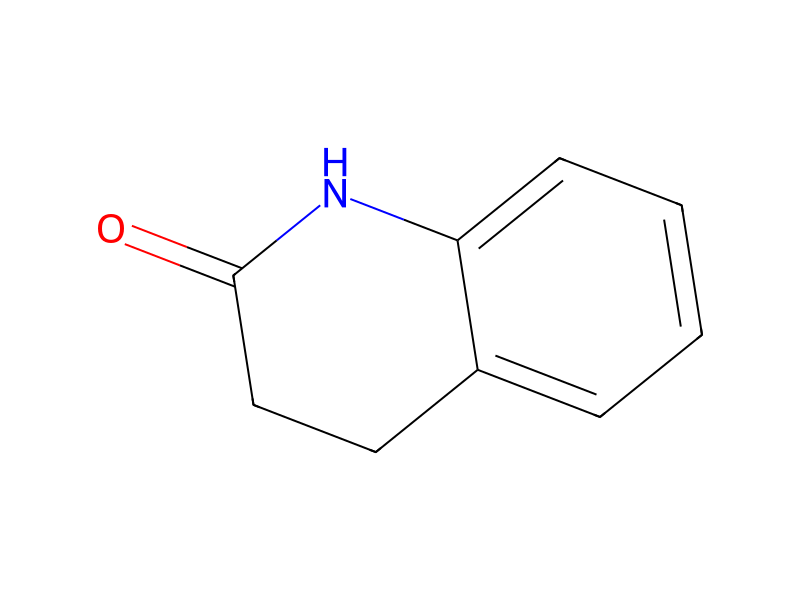

Product 1

Reagents, catalysts & solvents 1

Procedure
In to a mixture of 200 g of 3,4-dihydrocarbostyril, 160 ml of chloroacetylchloride and 300 ml of carbon disulfide, which was ice-cooled and stirred, 460 g of anhydrous pulverized aluminium chloride was added slowly at a temperature of the reaction vessel being kept within the range of from 5° to 15° C. After the addition of aluminium chloride was completed, the reaction mixture was refluxed for 40 minutes under stirring. The carbon disulfide was removed by decantation, then the residue obtained was poured into a large amount of ice-water and the crystals thus formed was collected by filtration, and washed with water well. The crystals was washed with methanol, dried then 280 g of 6-(2-chloroacetyl)-3,4-dihydrocarbostyril was obtained. Recrystallized from ethanol to obtain a colorless needle-like crystals. Melting point: 230°-231° C.
Workup
- temperaturecooled
- additionwas added slowly at a temperature of the reaction vessel
- custombeing kept within the range of from 5° to 15° C
- temperaturethe reaction mixture was refluxed for 40 minutes
- stirringunder stirring
- customThe carbon disulfide was removed by decantation
- customthe residue obtained
- customthe crystals thus formed
- filtrationwas collected by filtration
- washwashed with water well
- washThe crystals was washed with methanol
- customdried
Sources & evidence
- ORD record
- ord-b202c98543be48b995962c83fde4d74b
- Source dataset
- uspto-grants-1985_04
- Patent number
- US04514401
Reaction notes
Loading…