3-Bromo-6-propylpyridazine → HCID 178444404, compound
Reaction equation

Br[C:2]1[N:3]=[N:4][C:5]([CH2:8][CH2:9][CH3:10])=[CH:6][CH:7]=1.[C:11]([C@H:13]1[CH2:18][CH2:17][C@H:16]([CH2:19][CH2:20][CH2:21][CH2:22][CH3:23])[CH2:15][CH2:14]1)#[CH:12]>C(N(CC)CC)C.Cl[Pd](Cl)([P](C1C=CC=CC=1)(C1C=CC=CC=1)C1C=CC=CC=1)[P](C1C=CC=CC=1)(C1C=CC=CC=1)C1C=CC=CC=1.[Cu]I>[CH2:19]([C@H:16]1[CH2:15][CH2:14][C@H:13]([C:11]#[C:12][C:2]2[N:3]=[N:4][C:5]([CH2:8][CH2:9][CH3:10])=[CH:6][CH:7]=2)[CH2:18][CH2:17]1)[CH2:20][CH2:21][CH2:22][CH3:23]Participants
Reactant 2


Product 1

Reagents, catalysts & solvents 3
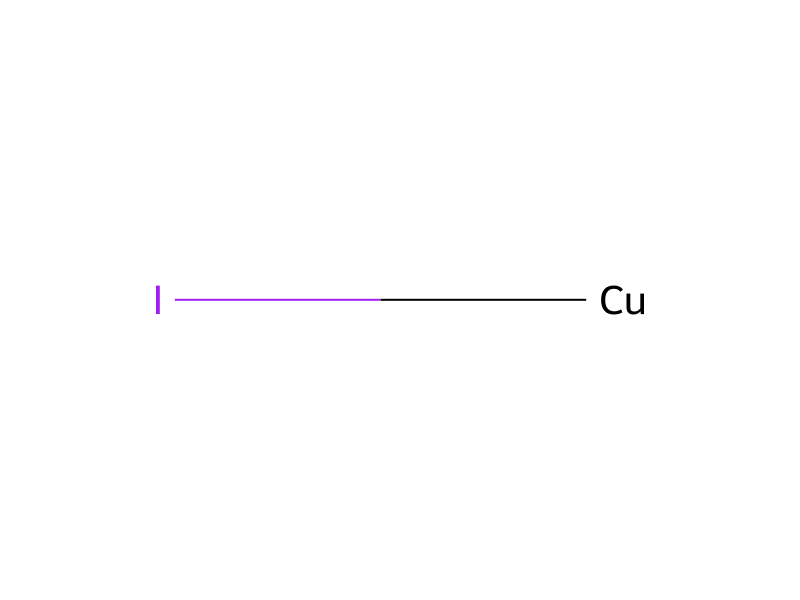
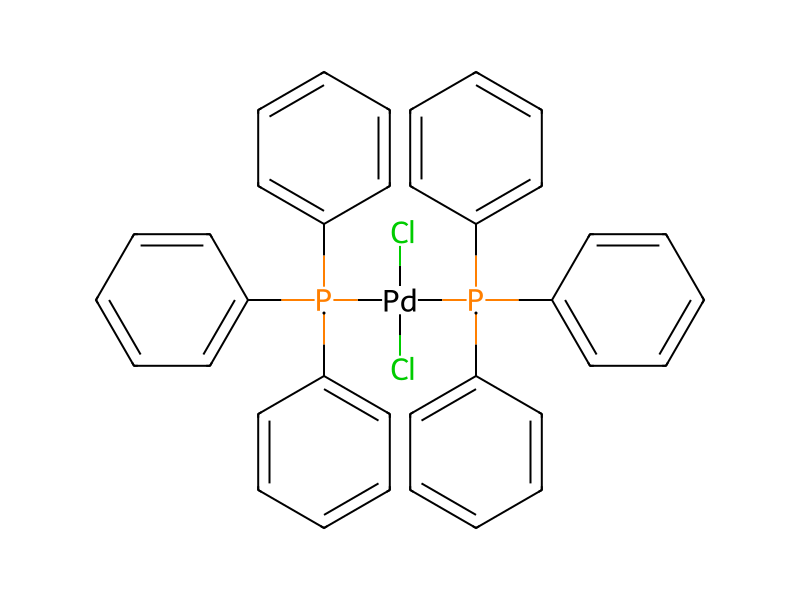
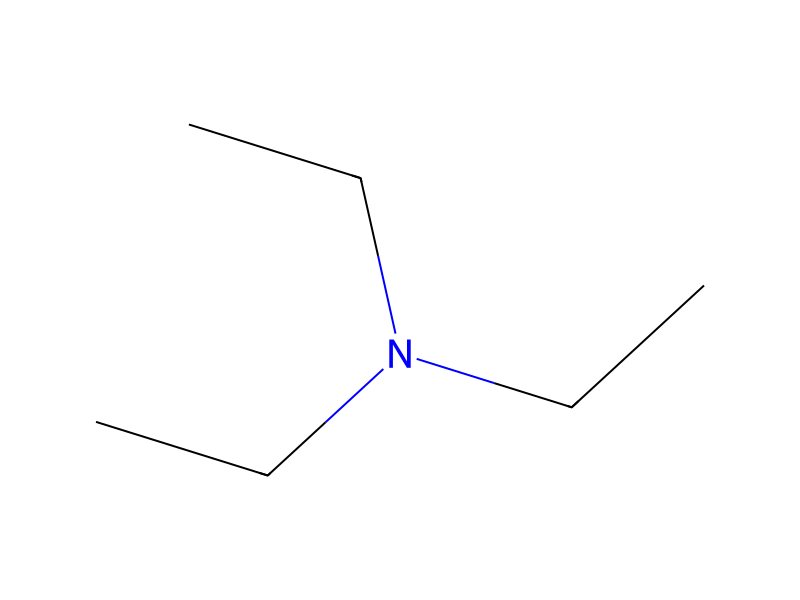
Conditions
- Temperature
- 0 °C
Procedure
8.0 g of 3-bromo-6-propylpyridazine were dissolved in 50 ml of triethylamine in a sulphonation flask under nitrogen. The solution was cooled to 0° C., treated with 562 mg of bis-(triphenylphosphine)-palladium (II) dichloride and 76 mg of copper (I) iodide and then treated dropwise within 20 minutes with 7.5 g of trans-1-ethynyl-4-pentylcyclohexane (prepared according to Example 2). The mixture was subsequently stirred overnight while cooling with an ice-bath and then heated to 50° C. for a further 3 hours. The mixture was concentrated on a rotary evaporator. The residue was taken up in 100 ml of hexane and washed with 100 ml of water, whereby the pH value of the aqueous phase was made neutral with ammonium chloride. The aqueous phase was back-extracted twice with 50 ml of hexane each time. The combined organic phases were washed with 100 ml of water and the aqueous phase was back-extracted with 50 ml of hexane. The organic phases were dried over sodium sulphate and freed from solvent on a rotary evaporator. Chromatography of the resulting brown crystallizing oil on silica gel with hexane/ethyl acetate (vol. 2:1) gave a fraction of the desired product 3-[2-(trans-4-pentylcyclohexyl)ethynyl]-6-propylpyridazine (5.2 g) as well as a mixed fraction (4.8 g) consisting of 3-bromo-6-propylpyridazine and product. The pure fraction was recrystallized from 15 ml of ethanol at -20° C. There were thus obtained 4.0 g of white crystals which were recrystallized from 25 ml of pentane at -20° C. The crystals were subsequently dried for 2 hours in a vacuum drying oven at 40° C. and then overnight at room temperature with a slight stream of nitrogen in a high vacuum, there being obtained 3.4 g of 3-[2-(trans-4-pentylcyclohexyl)ethynyl]-6-propylpyridazine as white crystals of melting point (C-I) 118°-118.5° C.
Workup
- temperaturewhile cooling with an ice-bath
- temperatureheated to 50° C. for a further 3 hours
- concentrationThe mixture was concentrated on a rotary evaporator
- washwashed with 100 ml of water, whereby the pH value of the aqueous phase
- extractionThe aqueous phase was back-extracted twice with 50 ml of hexane each time
- washThe combined organic phases were washed with 100 ml of water
- extractionthe aqueous phase was back-extracted with 50 ml of hexane
- dry with materialThe organic phases were dried over sodium sulphate
- customfreed from solvent on a rotary evaporator
- customChromatography of the resulting brown crystallizing oil on silica gel with hexane/ethyl acetate (vol. 2:1)
Sources & evidence
- ORD record
- ord-c8f01e2a84534dd88f428aa728e9fb23
- Source dataset
- uspto-grants-1986_06
- Patent number
- US04595521
Reaction notes
Loading…