3-Bromo-6-propylpyridazine → HCID 178444404, compound
Reaction equation

Br[C:2]1[N:3]=[N:4][C:5]([CH2:8][CH2:9][CH3:10])=[CH:6][CH:7]=1.[C:11]([C@H:13]1[CH2:18][CH2:17][C@H:16]([CH2:19][CH2:20][CH2:21][CH2:22][CH3:23])[CH2:15][CH2:14]1)#[CH:12]>C(N(CC)CC)C.COC(C)(C)C.Cl[Pd](Cl)([P](C1C=CC=CC=1)(C1C=CC=CC=1)C1C=CC=CC=1)[P](C1C=CC=CC=1)(C1C=CC=CC=1)C1C=CC=CC=1.[Cu]I>[CH2:19]([C@H:16]1[CH2:15][CH2:14][C@H:13]([C:11]#[C:12][C:2]2[N:3]=[N:4][C:5]([CH2:8][CH2:9][CH3:10])=[CH:6][CH:7]=2)[CH2:18][CH2:17]1)[CH2:20][CH2:21][CH2:22][CH3:23]Participants
Reactant 2


Product 1

Reagents, catalysts & solvents 4
Conditions
- Temperature
- 0 °C
Procedure
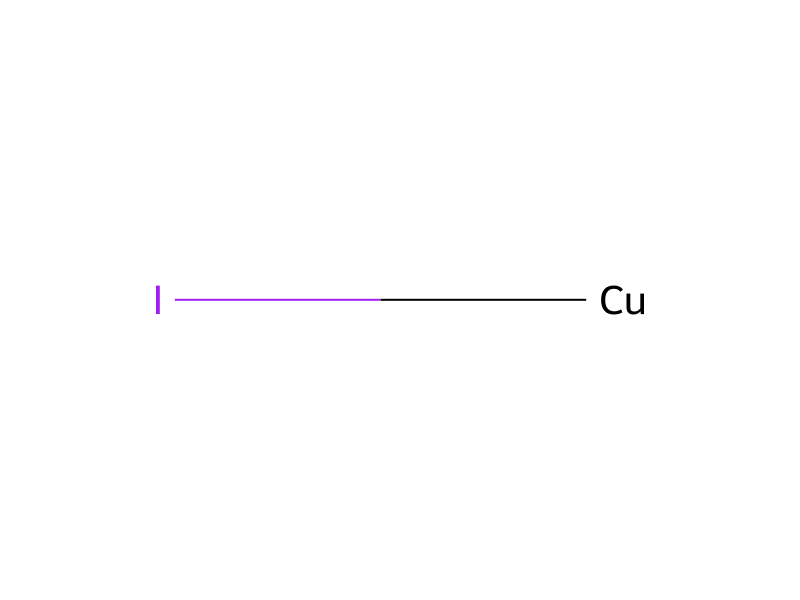
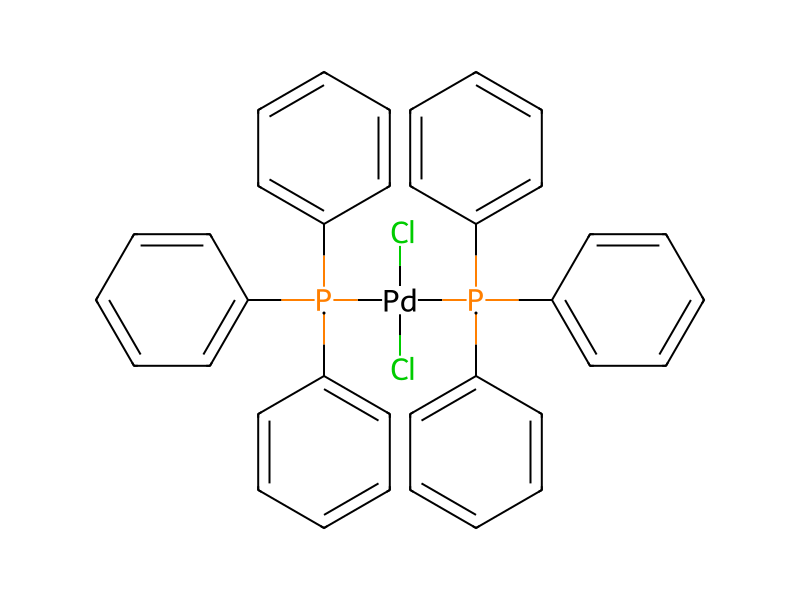
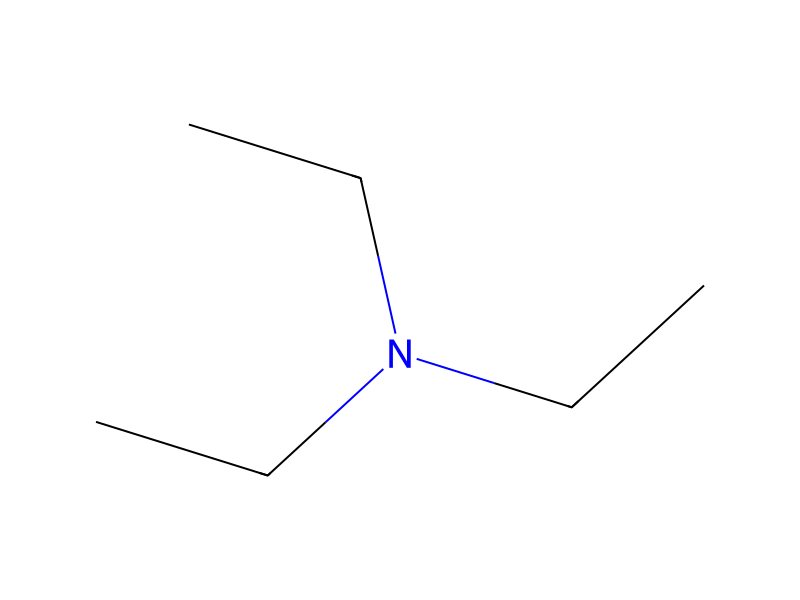
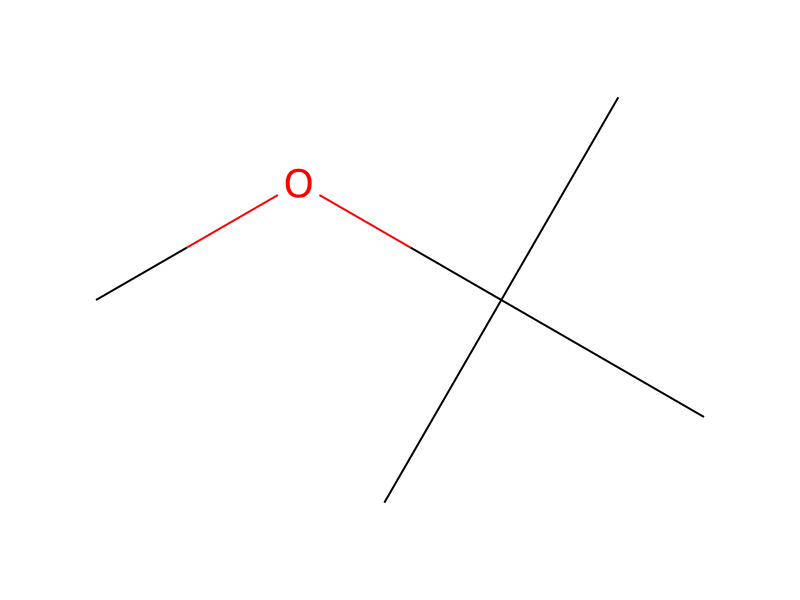
8.0 g of 3-bromo-6-propylpyridazine (prepared according to Example 3) were dissolved in 50 ml of triethylamine in a sulphonation flask under nitrogen. The solution was cooled to 0° C., treated with 562 mg of bis-(triphenylphosphine)-palladium (II) dichloride and 76 mg of copper (I) iodide and then treated dropwise within 20 minutes with 7.5 g of trans-1-ethynyl-4-pentylcyclohexane. The mixture was subsequently stirred at 0° C. for several hours, then at room temperature overnight and finally at 50° C. for a further 3 hours. For the working-up, the dark coloured mixture was diluted with 100 ml of tert.butyl methyl ether and suction filtered through a paper filter (rinsing with tert.butyl methyl ether). The filtrate was concentrated on a rotary evaporator. The dark coloured crystalline residue was taken up in 150 ml of tert.butyl methyl ether and washed successively with 100 ml of 2% (wt./vol.) ammonium chloride solution and with 100 ml of water. Each of the aqueous phases were back-extracted with a small amount of tert.butyl methyl ether. The combined organic phases were dried over sodium sulphate and concentrated on a rotary evaporator. For the purification, the brown coloured crystals obtained were chromatographed on silica gel with hexane/ethyl acetate (vol. 2:1), there being obtained a fraction of the desired product 3-[2-(trans-4-pentylcyclohexyl)ethynyl]-6-propylpyridazine (5.2 g) and a mixed fraction consisting of 3-bromo-6-propylpyridazine and product (4.8 g). The pure fraction was recrystallized once from ethanol at -20° C. and once from hexane at -20° C. and finally dried well in a vacuum drying oven at 40° C. There were thus obtained 3.4 g (28.5%) of 3-[2-(trans-4-pentylcyclohexyl)ethynyl]-6-propylpyridazine in the form of white crystals of melting point (C-I) 118.5° C., boiling point 210°-220° C./0.08 Torr.
Workup
- filtrationfiltered through a paper
- filtrationfilter
- wash(rinsing with tert.butyl methyl ether)
- concentrationThe filtrate was concentrated on a rotary evaporator
- washwashed successively with 100 ml of 2% (wt./vol.) ammonium chloride solution and with 100 ml of water
- extractionEach of the aqueous phases were back-extracted with a small amount of tert.butyl methyl ether
- dry with materialThe combined organic phases were dried over sodium sulphate
- concentrationconcentrated on a rotary evaporator
- customFor the purification
- customthe brown coloured crystals obtained
- customwere chromatographed on silica gel with hexane/ethyl acetate (vol. 2:1), there
Sources & evidence
- ORD record
- ord-d61fcb66abf2460d81cb6895305a4d5c
- Source dataset
- uspto-grants-1986_06
- Patent number
- US04595521
Reaction notes
Loading…