Potassium Chloride → CTK1G4675
Reaction equation

[Cl-].[K+].C([Al](CCCCCCCC)CCCCCCCC)CCCCCCC.C[Si](Cl)(Cl)Cl.[CH3:33][Si:34](CCCCCCCC)([CH2:43][CH2:44][CH2:45][CH2:46][CH2:47][CH2:48][CH2:49][CH3:50])[CH2:35][CH2:36][CH2:37][CH2:38][CH2:39][CH2:40][CH2:41][CH3:42].[Cl-].[Na+]>>[CH3:33][SiH:34]([CH2:35][CH2:36][CH2:37][CH2:38][CH2:39][CH2:40][CH2:41][CH3:42])[CH2:43][CH2:44][CH2:45][CH2:46][CH2:47][CH2:48][CH2:49][CH3:50]Participants
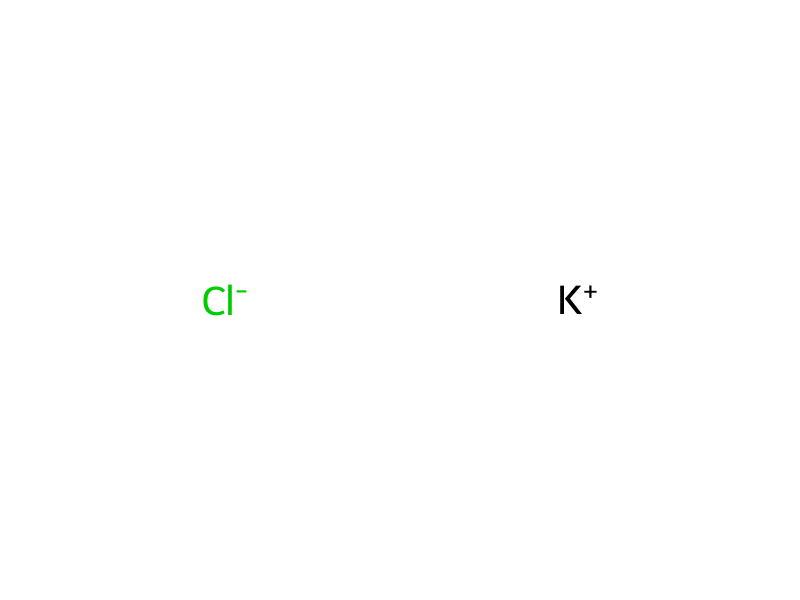



Procedure
Utilizing the apparatus of Examples 1-5, 100 millimoles of potassium chloride, 100 millimoles of tri-n-octylaluminum, and 98 millimoles of methyltrichlorosilane were reacted at 180° C. for 4 hours. The analyses utilized in Examples 1-5 revealed that only 8.3% mole percent methyltrioctylsilane was produced as compared with 63-66 mole percent methyltrioctylsilane that was produced using comparable conditions but adding sodium chloride (compare Examples 8 and 9 from Table II). The major product, methyldioctylsilane was produced in a 47.2 weight percent yield. Product was identified by characteristic infrared Si--H found at 2100 cm-1 ; independent synthesis by reaction of methyldichlorosilane with two equivalents of n-octyl-magnesium bromide; and conversion under hydrosilylation conditions with octene to methyltrioctylsilane. This clearly demonstrates a different mode of action for sodium chloride versus potassium chloride.
Workup
- customwere reacted at 180° C. for 4 hours
- customwas produced
- customwas produced
Sources & evidence
- ORD record
- ord-3e7b491f03f74fdd9b9c33c7d803dbfb
- Source dataset
- uspto-grants-1986_06
- Patent number
- US04595777
Reaction notes
Loading…