Ammonium Chloride → HCID 11594794, compound
Reaction equation
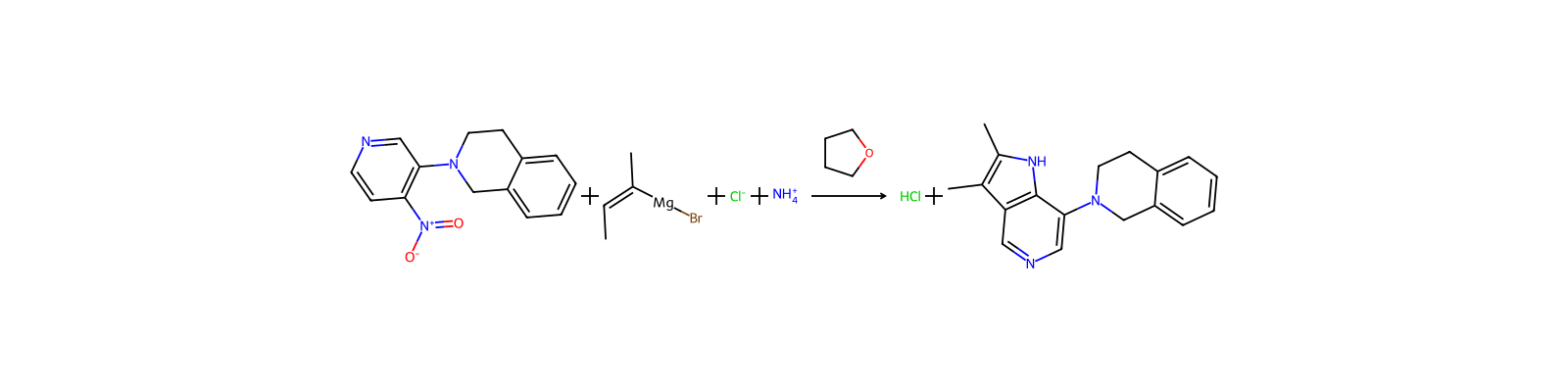
[N+:1]([C:4]1[CH:9]=[CH:8][N:7]=[CH:6][C:5]=1[N:10]1[CH2:19][CH2:18][C:17]2[C:12](=[CH:13][CH:14]=[CH:15][CH:16]=2)[CH2:11]1)([O-])=O.[CH3:20][C:21]([Mg]Br)=[CH:22][CH3:23].[Cl-:26].[NH4+]>O1CCCC1>[ClH:26].[CH3:20][C:21]1[NH:1][C:4]2[C:5]([N:10]3[CH2:19][CH2:18][C:17]4[C:12](=[CH:13][CH:14]=[CH:15][CH:16]=4)[CH2:11]3)=[CH:6][N:7]=[CH:8][C:9]=2[C:22]=1[CH3:23]Participants




Procedure
2-(4-Nitropyridin-3-yl)-1,2,3,4-tetrahydroisoquinoline (2.0 g, 7.835 mmol) prepared in Preparation 2 was dissolved in anhydrous tetrahydrofuran (100 ml) under a nitrogen atmosphere. 1-Methyl-1-propenyl magnesium bromide (0.5M in tetrahydrofuran solution, 9.4 ml) was added at −78° C. to the solution, which was then stirred for 20 minutes at the same temperature. 10 ml of 20% ammonium chloride solution was added to the reaction mixture, which was then extracted with ethyl acetate (100 ml) twice. The separated organic layer was dried on anhydrous magnesium sulfate and concentrated under reduced pressure. The resulting residue was purified with silica gel column chromatography (methylene chloride/methanol=10/1 (v/v)), dissolved in 5 ml of ethyl acetate and then saturated with hydrochloric acid gas. The resulting precipitate was filtered to give the titled compound as a white solid (850 mg, 19.5%).
Workup
- extractionwas then extracted with ethyl acetate (100 ml) twice
- dry with materialThe separated organic layer was dried on anhydrous magnesium sulfate
- concentrationconcentrated under reduced pressure
- customThe resulting residue was purified with silica gel column chromatography (methylene chloride/methanol=10/1 (v/v))
- dissolutiondissolved in 5 ml of ethyl acetate
- filtrationThe resulting precipitate was filtered
Sources & evidence
- ORD record
- ord-ae74b642819d423ba1ee3c1d8eea41a3
- Source dataset
- uspto-grants-2009_06
- Patent number
- US07541366B2
Reaction notes
Loading…