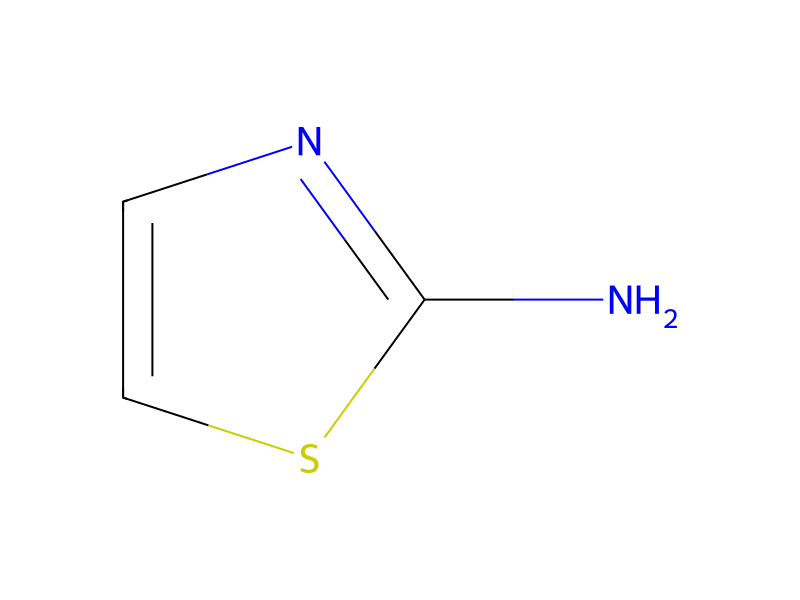
2-Aminothiazole → 3-(3-Methyl-butoxy)-4-nitrotoluene
Reaction equation

F[C:2]1[CH:3]=[C:4]([CH3:11])[CH:5]=[CH:6][C:7]=1[N+:8]([O-:10])=[O:9].[CH3:12][C:13]1[CH:19]=CC(N)=[C:15]([O:20][CH2:21]CC(C)C)[CH:14]=1.[NH2:26][C:27]1[S:28][CH:29]=[CH:30][N:31]=1>CC(C)CCO>[CH3:12][CH:13]([CH3:19])[CH2:14][CH2:15][O:20][C:2]1[CH:3]=[C:4]([CH3:11])[CH:5]=[CH:6][C:7]=1[N+:8]([O-:10])=[O:9].[S:28]1[CH:29]=[CH:30][N:31]=[C:27]1[NH:26][C:21](=[O:20])[NH2:8]Participants
6


Procedure
3-(3-Methyl-butoxy)-4-nitrotoluene (0.89 g, 80%) was prepared from 3-methylbutanol and 3-fluoro-4-nitrotoluene (0.77 g, 5.0 mmol) following the general procedure G. This was reduced to 4-methyl-2-(3-methylbutoxy)aniline (0.55 g, 72%) following general procedure C. 1-[4-Methyl-2-3-methyl-butoxy)-phenyl]-3-thiazol-2-yl-urea (240 mg, 76%) was prepared from 4-methyl-2-(3-methyl-butoxy)aniline (193 mg, 1.0 mmol) and 2-aminothiazole (100 mg, 1.0 mmol) following the general procedure D.
Sources & evidence
- ORD record
- ord-1ba8134130dc4444986250cc56c26ebb
- Source dataset
- uspto-grants-2009_06
- Patent number
- US07541373B2
Reaction notes
Loading…