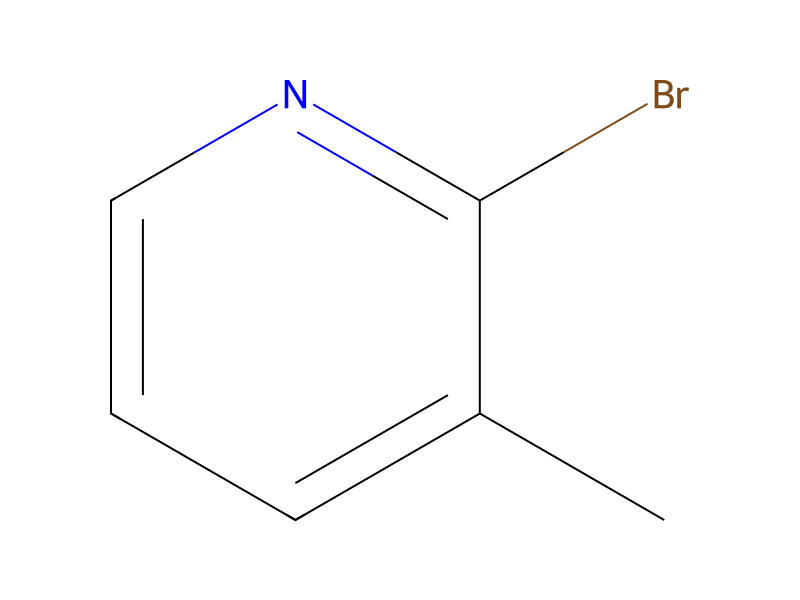
2-Bromo-3-methylpyridine → HCID 24783917, compound
Reaction equation

[C:1]([C:3]1[C:4]([C:9]2[CH:14]=[CH:13][CH:12]=[CH:11][CH:10]=2)=[N:5][O:6][C:7]=1[CH3:8])#[CH:2].Br[C:16]1[C:21]([CH3:22])=[CH:20][CH:19]=[CH:18][N:17]=1>>[CH3:22][C:21]1[C:16]([C:2]#[C:1][C:3]2[C:4]([C:9]3[CH:14]=[CH:13][CH:12]=[CH:11][CH:10]=3)=[N:5][O:6][C:7]=2[CH3:8])=[N:17][CH:18]=[CH:19][CH:20]=1Participants
3


Procedure
As described for example 11c, 4-ethynyl-5-methyl-3-phenyl-isoxazole (92 mg, 0.50 mmol) was converted (using 2-bromo-3-methylpyridine instead of 2-chloro-4-iodopyridine) to the title compound (SiO2, heptane:ethyl acetate=95:5 to 0:100, 91 mg, 66%) which was obtained as a light yellow solid. MS: m/e=275.2 [M+H]+.
Sources & evidence
- ORD record
- ord-e4b3874a6f9e416dbd3dbd2f7b8eaaa8
- Source dataset
- uspto-grants-2009_06
- Patent number
- US07544704B2
Reaction notes
Loading…