Carbon Dioxide → Sodium Salicylate
Reaction equation

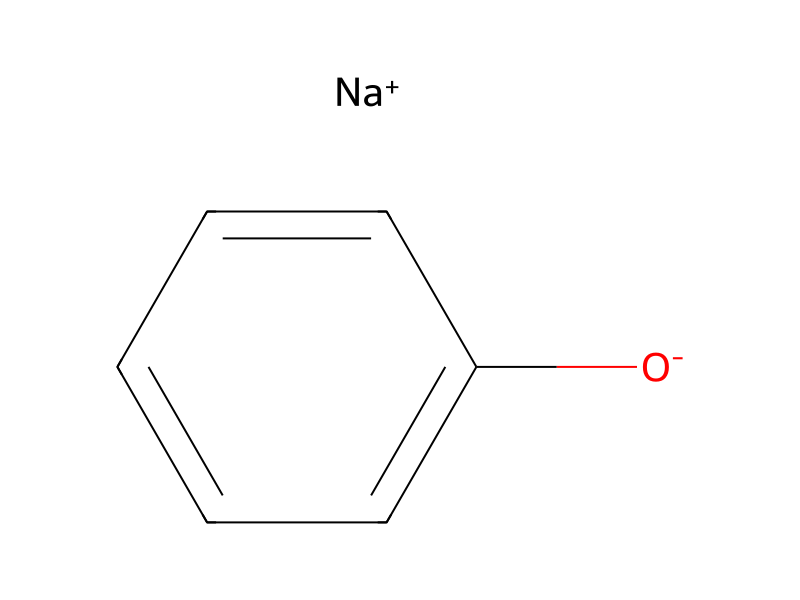
C([O:4][C:5]1[C:6](=[CH:10][CH:11]=[CH:12][CH:13]=1)[C:7]([OH:9])=[O:8])(=O)C.C1(O)C=CC=CC=1.[Na].[O-]C1C=CC=CC=1.[Na+:29].C(=O)=O>>[C:7]([O-:9])(=[O:8])[C:6]1[C:5](=[CH:13][CH:12]=[CH:11][CH:10]=1)[OH:4].[Na+:29]Participants
6





Procedure
Acetyl salicylic acid is commercially synthesized by Kolbe-Schmidt reaction which is a multi-step process. In this process, phenol is treated with a sodium base generating sodium phenoxide, which is then reacted with carbon dioxide under high temperature (125° C.) and pressure (100 atmosphere) to yield sodium salicylate, which on acidification yields salicylic acid. Salicylic acid is then acetylated with acetic anhydride to prepare acetyl salicylic acid. Existing process of the synthesis of acetyl salicylic acid is an acid catalyzed esterification reaction by the acetylation of the salicylic acid with acetic anhydride using conventional liquid acids, namely, conc. H2SO4 or conc. H3PO4 at the temperature of 80-90° C.
Sources & evidence
- ORD record
- ord-071cbaf312b04836aee0d57a1f878051
- Source dataset
- uspto-grants-2009_06
- Patent number
- US07544831B2
Reaction notes
Loading…