2-Fluoroaniline → Bis(2-fluorophenyl)amine
Reaction equation

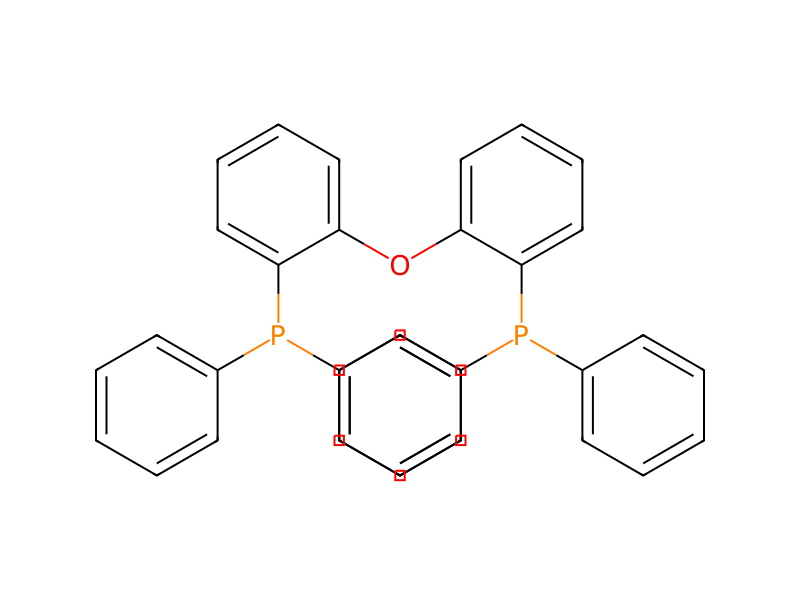
[F:1][C:2]1[CH:8]=[CH:7][CH:6]=[CH:5][C:3]=1[NH2:4].Br[C:10]1[CH:15]=[CH:14][CH:13]=[CH:12][C:11]=1[F:16].C1C=CC(P(C2C(OC3C(P(C4C=CC=CC=4)C4C=CC=CC=4)=CC=CC=3)=CC=CC=2)C2C=CC=CC=2)=CC=1.CC([O-])(C)C.[Na+]>CC([O-])=O.CC([O-])=O.[Pd+2].C1(C)C=CC=CC=1>[F:1][C:2]1[CH:8]=[CH:7][CH:6]=[CH:5][C:3]=1[NH:4][C:10]1[CH:15]=[CH:14][CH:13]=[CH:12][C:11]=1[F:16]Participants






Procedure
A Schlenk flask was charged with 2-fluoroaniline (5.55 g, 50 mmol), 1-bromo-2-fluorobenzene (8.75 g, 50 mmol), Pd(OAc)2 (0.020 g, 0.089 mmol, 0.5% equiv), DPEPhos (0.216 g, 0.401 mmol, 0.75% equiv), NaOtBu (7.185 g, 74.84 mmol, 1.4 equiv), and toluene (45 mL) under nitrogen. The reaction mixture was heated to reflux with stirring. The reaction was monitored by GC, which showed complete formation of the desired product in 1 d. After being cooled to room temperature, the reaction was quenched with deionized water (45 mL). The organic portion was separated from the aqueous layer, which was further extracted with toluene (10 mL×2). The combined organic solution was dried over MgSO4 and filtered. All volatiles were removed in vacuo to yield red oil, which was directly used for the subsequent reaction; yield 9.38 g (91.4%). 1H NMR (CDCl3, 500 MHz) δ 7.42 (m, 2, Ar), 7.25 (m, 2, Ar), 7.20 (m, 2, Ar), 7.04 (m, 2, Ar), 6.03 (br s, 1, NH). 19F NMR (CDCl3, 470.5 MHz) δ-133.07. 13C NMR (CDCl3, 125 MHz) δ 153.45 (JCF=241, CF), 130.45 (JCF=11.75, CN), 124.14 (JCF=3.63, CH), 121.38 (JCF=7.25, CH), 117.98 (CH), 115.45 (JCF=19.00, CH). LR-MS (EI): calcd. for C12H9F2N m/z 205, found m/z 205. Anal. Calcd. for C12H9F2N: C, 70.24; H, 4.42; N, 6.83. Found: C, 70.13; H, 4.52; N, 6.69.
Workup
- temperatureThe reaction mixture was heated
- temperatureto reflux
Sources & evidence
- ORD record
- ord-cc8db4e4f2ab4ab49336e75d0c8a9b3a
- Source dataset
- uspto-grants-2009_06
- Patent number
- US07553924B2
Reaction notes
Loading…