Potassium Carbonate → HCID 68705379, compound
Reaction equation

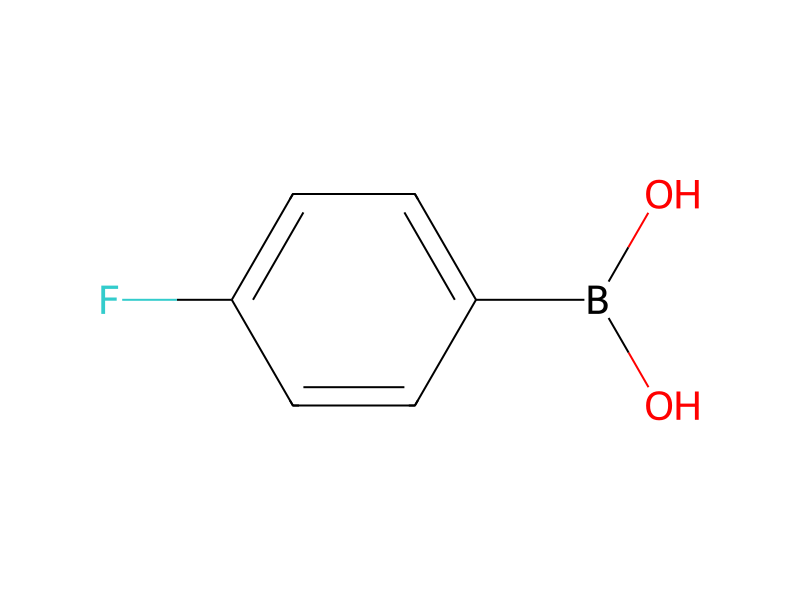
Cl[C:2]1[CH:7]=[CH:6][N:5]=[CH:4][C:3]=1[N+:8]([O-:10])=[O:9].[F:11][C:12]1[CH:17]=[CH:16][C:15](B(O)O)=[CH:14][CH:13]=1.C(=O)([O-])[O-].[K+].[K+]>O1CCOCC1.C1C=CC([P]([Pd]([P](C2C=CC=CC=2)(C2C=CC=CC=2)C2C=CC=CC=2)([P](C2C=CC=CC=2)(C2C=CC=CC=2)C2C=CC=CC=2)[P](C2C=CC=CC=2)(C2C=CC=CC=2)C2C=CC=CC=2)(C2C=CC=CC=2)C2C=CC=CC=2)=CC=1>[F:11][C:12]1[CH:17]=[CH:16][C:15]([C:2]2[CH:7]=[CH:6][N:5]=[CH:4][C:3]=2[N+:8]([O-:10])=[O:9])=[CH:14][CH:13]=1Participants
6





Procedure
4-Chloro-3-nitropyridine (3 g, 18.9 mmol) prepared in Step 1 of Preparation 1, 4-fluorophenylboronic acid (2.9 g, 20.79 mmol), tetrakis(triphenylphosphine)palladium(0) (2.1 g, 1.89 mmol), and potassium carbonate (7.8 g, 56.7 mmol) were suspended in 120 ml of 1,4-dioxane. The resulting suspension was refluxed under stirring for 24 hours, filtered with Celite, and then concentrated under reduced pressure. The resulting residue was purified with silica gel column chromatography to give 1.76 g of the titled compound as a pale yellow solid.
Workup
- temperatureThe resulting suspension was refluxed
- filtrationfiltered with Celite
- concentrationconcentrated under reduced pressure
- customThe resulting residue was purified with silica gel column chromatography
Sources & evidence
- ORD record
- ord-b108f808f0704af7a0e73ad1ae135343
- Source dataset
- uspto-grants-2010_01
- Patent number
- US07642269B2
Reaction notes
Loading…