p-Toluenesulfonic acid → 2-(5-Bromo-2-methoxyphenyl)-1,3-dioxane
Reaction equation

[Br:1][C:2]1[CH:9]=[C:6]([CH:7]=[O:8])[C:5]([O:10][CH3:11])=[CH:4][CH:3]=1.[CH2:12](O)[CH2:13][CH2:14][OH:15].C1(C)C=CC(S(O)(=O)=O)=CC=1>C1(C)C=CC=CC=1>[Br:1][C:2]1[CH:3]=[CH:4][C:5]([O:10][CH3:11])=[C:6]([CH:7]2[O:15][CH2:14][CH2:13][CH2:12][O:8]2)[CH:9]=1Participants
5
Reactant 3

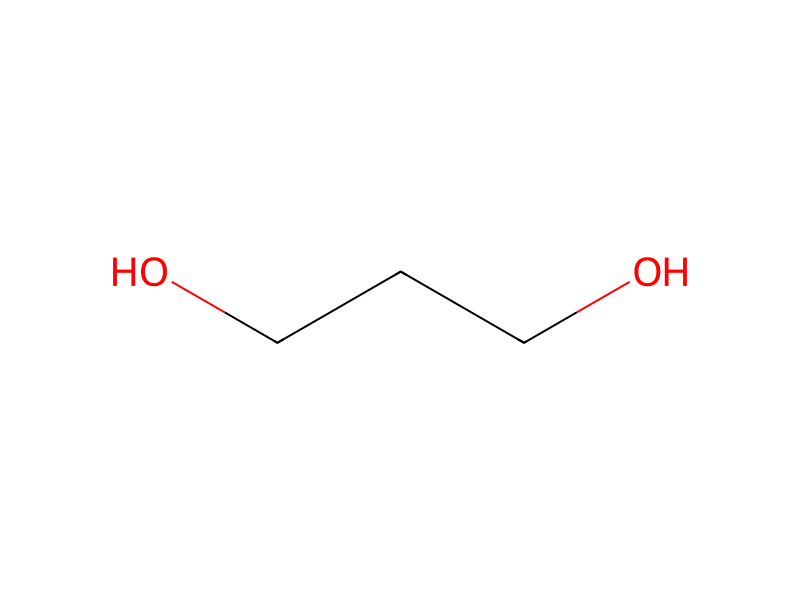

Product 1

Reagents, catalysts & solvents 1

Procedure
A solution of 5-bromo-o-anisaldehyde (25 g, 116 mmol), 1,3-propandiol (9 mL, 125 mmol), p-toluenesulphonic acid (0.1 g) in toluene (150 mL) was heated and water was azeotropically removed using a Dean-Stark water-separator. After 18 hours, the solution was washed with 5% Na2CO3 (100 ml), dried (K2CO3) and the solvent was removed under reduced pressure. The acetal was purified by vacuumdistillation and isolated as clear oil:
Workup
- customwater was azeotropically removed
- washthe solution was washed with 5% Na2CO3 (100 ml)
- dry with materialdried (K2CO3)
- customthe solvent was removed under reduced pressure
- distillationThe acetal was purified by vacuumdistillation
- customisolated as clear oil
Sources & evidence
- ORD record
- ord-95506ddb693e4a6293977021e0ab0fcd
- Source dataset
- uspto-grants-2010_01
- Patent number
- US07642367B2
Reaction notes
Loading…