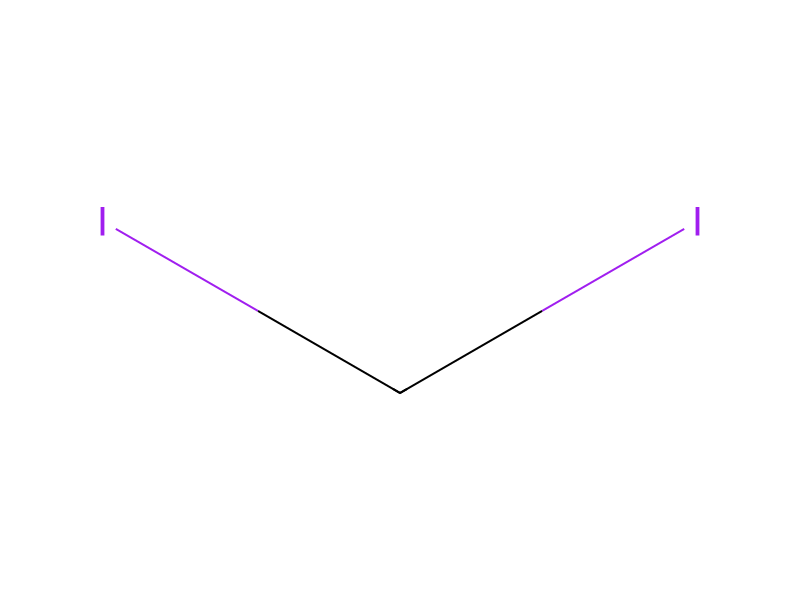
Diiodomethane → 4-Tert-butyl-phenyl-4-cyano-5-iodo-thiophene-2-carboxylic acid methyl ester
Reaction equation

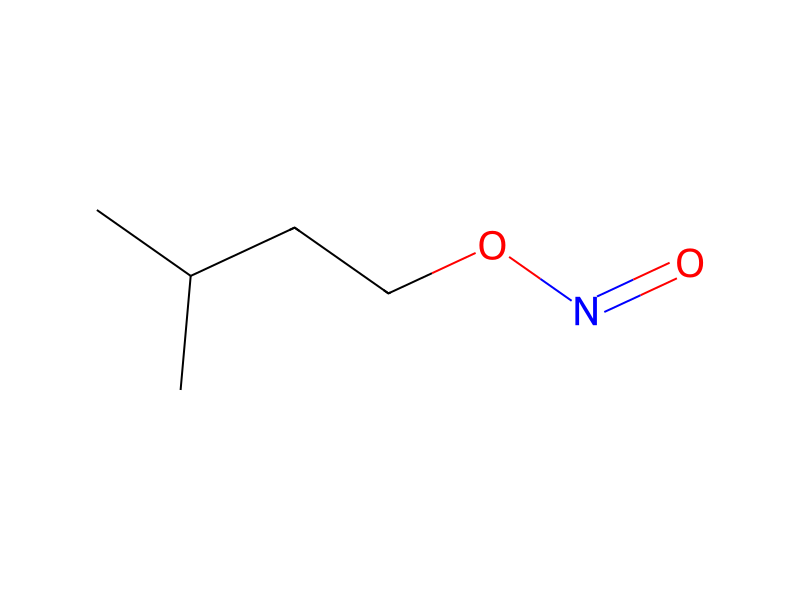
[CH3:1][O:2][C:3]([C:5]1[S:6][C:7](N)=[C:8]([C:20]#[N:21])[C:9]=1[C:10]1[CH:15]=[CH:14][C:13]([C:16]([CH3:19])([CH3:18])[CH3:17])=[CH:12][CH:11]=1)=[O:4].[I:23]CI.N(OCCC(C)C)=O>C(#N)C>[CH3:1][O:2][C:3]([C:5]1[S:6][C:7]([I:23])=[C:8]([C:20]#[N:21])[C:9]=1[C:10]1[CH:15]=[CH:14][C:13]([C:16]([CH3:19])([CH3:18])[CH3:17])=[CH:12][CH:11]=1)=[O:4]Participants
5
Reactant 3

Product 1

Reagents, catalysts & solvents 1

Conditions
- Temperature
- 100 °C
Procedure
Combine 5-amino-3-(4-tert-butyl-phenyl)-4-cyano-thiophene-2-carboxylic acid methyl ester (0.29 mmol) in acetonitrile and add diiodomethane (1.02 mmol) and iso-amyl nitrite (0.73 mmol) and heat to 100° C. After 15 minutes, cool the reaction slowly to room temperature and stir an additional 1 hour. Concentrate the reaction to a dark oil which is purified by radial chromatography on a 2000 micron silica plate eluting with 50/50 methylene chloride/hexane and then 100% methylene chloride. Concentrate desired fractions were to give the title compound. 1H NMR (400 MHz, CDCl3) δ 7.41 (m, 4H), 3.78 (s, 3H), 1.37 (s, 9H).
Workup
- temperaturecool
- customthe reaction slowly to room temperature
- concentrationConcentrate
- customthe reaction to a dark oil which
- customis purified by radial chromatography on a 2000 micron silica plate
- washeluting with 50/50 methylene chloride/hexane
- concentrationConcentrate desired fractions
Sources & evidence
- ORD record
- ord-eca4a83dc3a54b0984fe5e8ad130ee8e
- Source dataset
- uspto-grants-2010_01
- Patent number
- US07642361B2
Reaction notes
Loading…