Sodium Carbonate → 3-Chloro-2,4-difluorobenzyl alcohol
Reaction equation

[Cl:1][C:2]1[C:3]([F:12])=[C:4]([CH:8]=[CH:9][C:10]=1[F:11])[C:5](O)=[O:6].CSC.B.C([O-])([O-])=O.[Na+].[Na+]>C1COCC1>[Cl:1][C:2]1[C:3]([F:12])=[C:4]([CH2:5][OH:6])[CH:8]=[CH:9][C:10]=1[F:11]Participants
5
Reactant 3


Product 1

Reagents, catalysts & solvents 1

Procedure
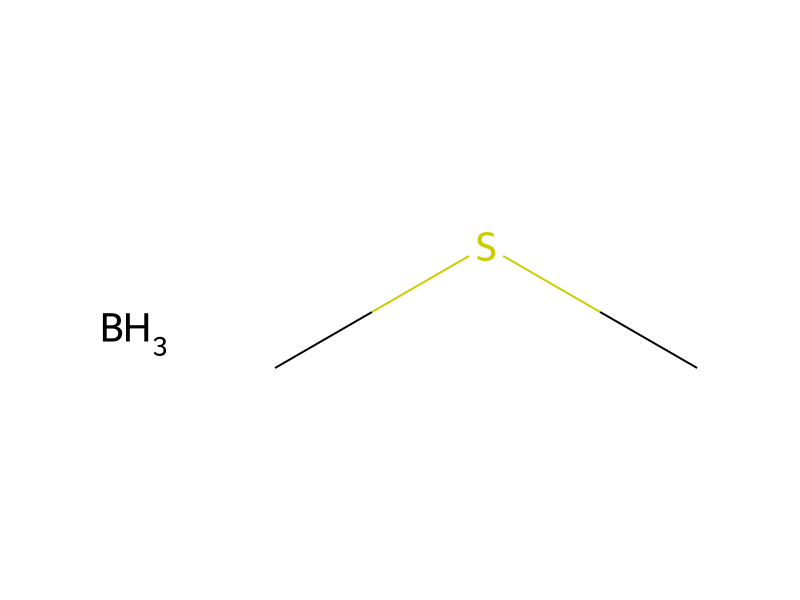
3-Chloro-2,4-difluorobenzoic acid (5.37 g, 27.9 mmol) was dissolved in THF (20 mL) and the solution was cooled to 0 deg. Borane methylsulfide (2.0 M in THF, 55.8 ml, 112 mmol) was added. The resulting solution was warmed to rt and stirred for 14 h. The solution was cooled in an ice bath, and 10% aqueous Na2CO3 (7 mL) was added slowly. The material was concentrated on the rotovap to a white solid. The residue was acidified with 3M aqueous HCl (30 mL), diluted with dichloromethane (50 mL), and the mixture was filtered through Celite. The layers were separated, and the organic layer was dried over sodium sulfate and concentrated. The residue was purified through silica gel (500 mL) using 30% EtOAc-hexane, to afford the title compound.
Workup
- temperaturethe solution was cooled to 0 deg
- temperatureThe solution was cooled in an ice bath
- concentrationThe material was concentrated on the rotovap to a white solid
- additiondiluted with dichloromethane (50 mL)
- filtrationthe mixture was filtered through Celite
- customThe layers were separated
- dry with materialthe organic layer was dried over sodium sulfate
- concentrationconcentrated
- customThe residue was purified through silica gel (500 mL)
Sources & evidence
- ORD record
- ord-212713683db7404d83e21b3c6d1544de
- Source dataset
- uspto-grants-2010_06
- Patent number
- US07745484B2
Reaction notes
Loading…