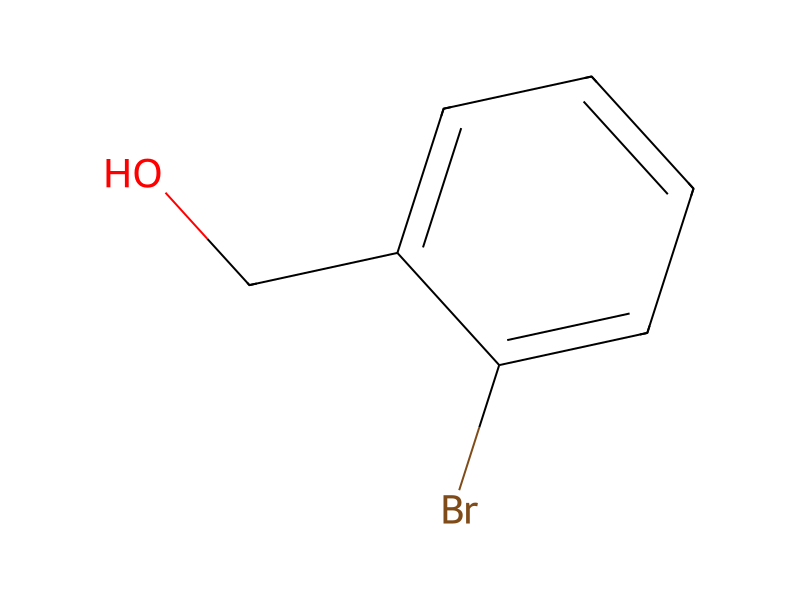
2-Bromobenzyl alcohol → Tert-butyl 3-hydroxy-3-[2-(hydroxymethyl)phenyl]piperidine-1-carboxylate
Reaction equation

Br[C:2]1[CH:7]=[CH:6][CH:5]=[CH:4][C:3]=1[CH2:8][OH:9].[O:10]=[C:11]1[CH2:16][CH2:15][CH2:14][N:13]([C:17]([O:19][C:20]([CH3:23])([CH3:22])[CH3:21])=[O:18])[CH2:12]1.C([Li])CCC>>[OH:10][C:11]1([C:2]2[CH:7]=[CH:6][CH:5]=[CH:4][C:3]=2[CH2:8][OH:9])[CH2:16][CH2:15][CH2:14][N:13]([C:17]([O:19][C:20]([CH3:23])([CH3:22])[CH3:21])=[O:18])[CH2:12]1Participants
4



Procedure
The object product (1.6 g, 30%) was obtained in the same manner as in Example 14(1) and using (2-bromophenyl)methanol (3.3 g), tert-butyl 3-oxopiperidine-1-carboxylate (3.5 g) and n-butyllithium (1.6 M hexane solution, 23 mL).
Sources & evidence
- ORD record
- ord-6ad32376a4764347ac8f5f7e2ecfc827
- Source dataset
- uspto-grants-2013_11
- Patent number
- US08575167B2
Reaction notes
Loading…