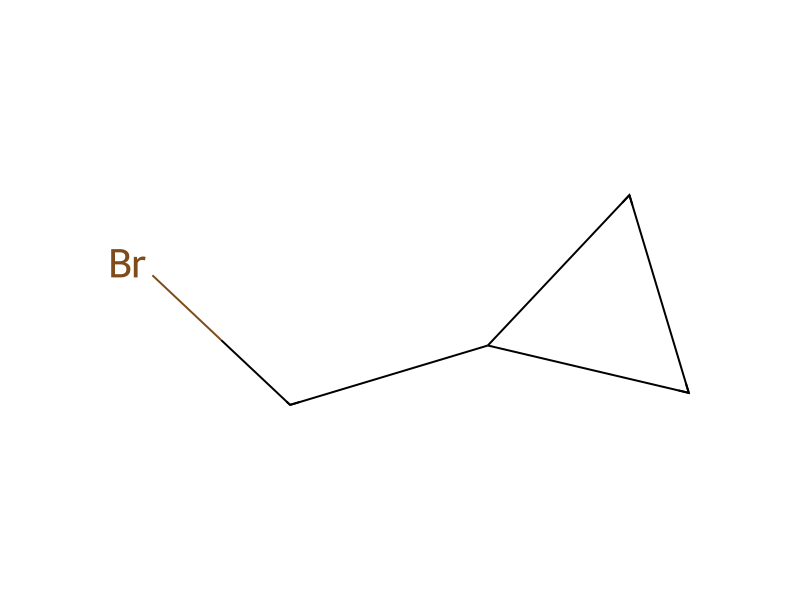
Bromomethylcyclopropane → Naltrexone
Reaction equation

[CH3:1][N:2]1[C@@H:12]2[CH2:13][C:14]3[CH:19]=[CH:18][C:17]([OH:20])=[C:16]4[O:21][C@H:6]5[C:7]([CH:9]=[CH:10][C@:11]2([OH:22])[C@:5]5([C:15]=34)[CH2:4][CH2:3]1)=[O:8].[CH:23]1(CBr)[CH2:25][CH2:24]1>>[CH:19]1[C:14]2[CH2:13][C@H:12]3[N:2]([CH2:1][CH:23]4[CH2:25][CH2:24]4)[CH2:3][CH2:4][C@:5]45[C@H:6]([C:7]([CH2:9][CH2:10][C@@:11]34[OH:22])=[O:8])[O:21][C:16]([C:15]=25)=[C:17]([OH:20])[CH:18]=1Participants


Procedure
Naltrexone can be produced from noroxymorphone by various direct and indirect alkylation methods. One method is by direct alkylation of noroxymorphone with cyclopropylmethylbromide. This process has been disclosed in general terms by Rice in WO 91/05768. Sanofi-Avensis (WO 2008/034973) describes a process for obtaining naltrexone in 88.6% yield by reacting noroxymorphone hydrochloride with cyclopropylmethylbromide in dimethylacetamide in the presence of sodium hydrogen carbonate. Cilag (WO 2008/138605) describes N-alkylation of noroxymorphone with cyclopropylmethylbromide in N-methyl-pyrrolidone in the presence of sodium hydrogen carbonate. Mallinckrodt (WO 2010/039209) describes N-alkylation of noroxymorphone with cyclopropylmethylbromide in the presence of a protic solvent. Specific examples in WO 2010/039209 describe the addition of water, isopropanol or ethanol as the protic solvent.
Sources & evidence
- ORD record
- ord-8a7572152f29450f905480eeb6671348
- Source dataset
- uspto-grants-2013_11
- Patent number
- US08580963B2
Reaction notes
Loading…