Methylhydrazine → HCID 135982274, compound
Reaction equation

O[CH:2]([CH:6]1[CH2:15][CH2:14][C:13]2[C:8](=[CH:9][CH:10]=[C:11]([O:16]C)[CH:12]=2)[C:7]1=O)[C:3](O)=[O:4].[CH3:19][NH:20][NH2:21].B(Br)(Br)Br>CC(O)C>[OH:16][C:11]1[CH:10]=[CH:9][C:8]2[C:7]3[C:6](=[CH:2][C:3](=[O:4])[N:20]([CH3:19])[N:21]=3)[CH2:15][CH2:14][C:13]=2[CH:12]=1Participants
Reactant 3
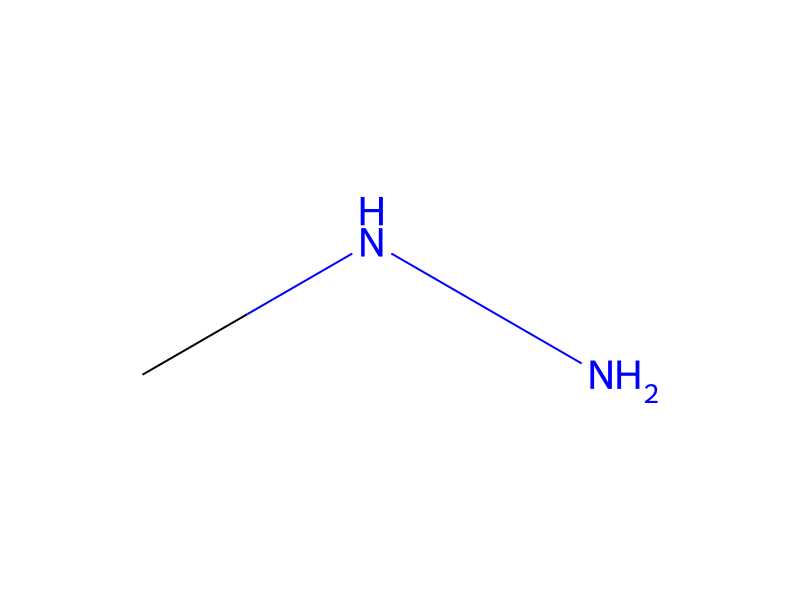


Product 1

Reagents, catalysts & solvents 1

Procedure
A solution of the product from step 1 (700 mg, 2.8 mmol) and N-methylhydrazine (0.3 mL) in 2-propanol (10 mL) was heated to reflux 18 h. The solvent was removed under vacuum and the solid was triturated with methanol (2 mL), collected and then suspended in methylene chloride (2 mL) at 0° C. BBr3 (10 mL of 1M solution in DCM, 10 mmol) was slowly added dropwise and the ice bath removed. After 3 h at ambient temperature, saturated NH4Cl solution (10 mL) was added. The DCM was removed under vacuum and the resulting slurry was carefully neutralized with saturated NaHCO3 solution and washed with water. The solids were collected to afford 8-hydroxy-2-methyl-5,6-dihydro-2H-benzo[h]cinnolin-3-one (175 mg, 27%) as a white solid; mp>300° C. MS m/z 229 (M+H).
Workup
- temperatureto reflux 18 h
- customThe solvent was removed under vacuum
- customthe solid was triturated with methanol (2 mL)
- customcollected
- customsuspended in methylene chloride (2 mL) at 0° C
- customthe ice bath removed
- additionsaturated NH4Cl solution (10 mL) was added
- customThe DCM was removed under vacuum
- washwashed with water
- customThe solids were collected
Sources & evidence
- ORD record
- ord-3d77580caac54664b503ec646d3d6593
- Source dataset
- uspto-grants-2013_11
- Patent number
- US08586588B2
Reaction notes
Loading…