Guanidine Hydrochloride → 2-Amino-7-phenyl-7,8-dihydro-6H-quinazolin-5-one
Reaction equation

CN(C=C1C(=O)CC(C2C=CC=CC=2)CC1=O)C.Cl.NC(N)=N.C(=O)([O-])[O-].[Na+].[Na+].[NH2:30][C:31]1[N:40]=[CH:39][C:38]2[C:37](=[O:41])[CH2:36][CH:35]([C:42]3[CH:47]=[CH:46][C:45](Cl)=[CH:44][CH:43]=3)[CH2:34][C:33]=2[N:32]=1>>[NH2:30][C:31]1[N:40]=[CH:39][C:38]2[C:37](=[O:41])[CH2:36][CH:35]([C:42]3[CH:47]=[CH:46][CH:45]=[CH:44][CH:43]=3)[CH2:34][C:33]=2[N:32]=1Participants
5
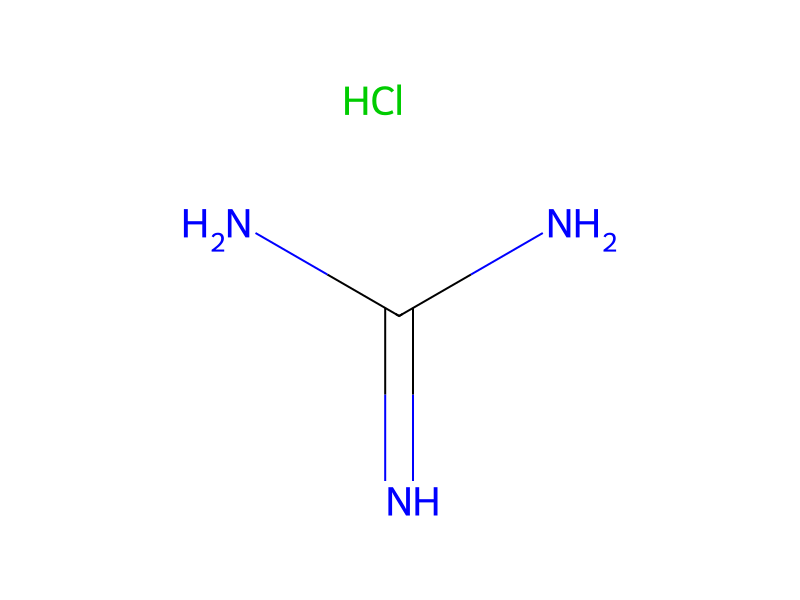



Procedure
The title compound was prepared from 2-dimethylaminomethylene-5-phenyl-cyclohexane-1,3-dione (600 mg, 2.46 mmol) from stage 1, guanidine hydrochloride (473 mg, 4.94 mmol) and sodium carbonate (783 mg, 7.38 mmol), following the procedure described for the synthesis of 2-amino-7-(4-chloro-phenyl)-7,8-dihydro-6H-quinazolin-5-one (example 2/a stage 2) except that the mixture was heated to reflux for 16 h.
Workup
- temperaturewas heated
- temperatureto reflux for 16 h.
Sources & evidence
- ORD record
- ord-00e901b3457a40659bad10fc09e11b0b
- Source dataset
- uspto-grants-2013_11
- Patent number
- US08592430B2
Reaction notes
Loading…