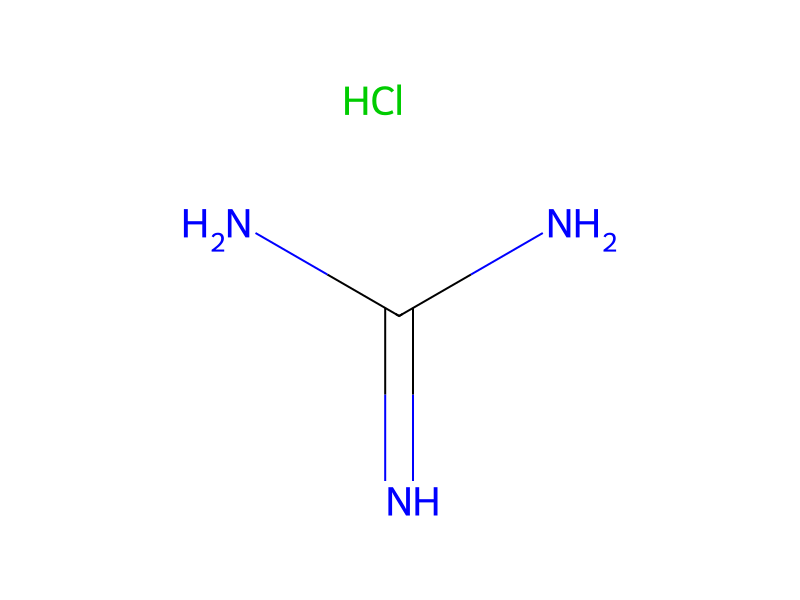
Guanidine Hydrochloride → 2-Amino-7-(2-methoxy-phenyl)-7,8-dihydro-6H-quinazolin-5-one
Reaction equation

CN([CH:4]=[C:5]1[C:10](=O)[CH2:9][CH:8]([C:12]2[CH:17]=[CH:16][CH:15]=[CH:14][C:13]=2[O:18][CH3:19])[CH2:7][C:6]1=[O:20])C.Cl.[NH2:22][C:23]([NH2:25])=[NH:24].C(=O)([O-])[O-].[Na+].[Na+].NC1N=CC2C(=O)CC(C3C=CC(Cl)=CC=3)CC=2N=1>O>[NH2:24][C:23]1[N:25]=[CH:4][C:5]2[C:6](=[O:20])[CH2:7][CH:8]([C:12]3[CH:17]=[CH:16][CH:15]=[CH:14][C:13]=3[O:18][CH3:19])[CH2:9][C:10]=2[N:22]=1Participants
6
Reactant 4



Product 1

Reagents, catalysts & solvents 1

Procedure
The title compound was prepared from 2-dimethylaminomethylene-5-(2-methoxy-phenyl)-cyclohexane-1,3-dione (484 mg, 1.77 mmol) from stage 1, guanidine hydrochloride (253 mg, 2.55 mmol) and sodium carbonate (469 mg, 4.42 mmol), following the procedure described for the synthesis of 2-amino-7-(4-chloro-phenyl)-7,8-dihydro-6H-quinazolin-5-one (example 2/a stage 2) except that the mixture was heated at reflux for 2 h. The reaction mixture was cooled to ambient temperature; water (5 ml) was then added. The precipitate formed was filtered and washed with water (5 ml) to afford the title molecule as a brown powder.
Workup
- temperaturewas heated
- temperatureat reflux for 2 h
- customThe precipitate formed
- filtrationwas filtered
- washwashed with water (5 ml)
- customto afford the title molecule as a brown powder
Sources & evidence
- ORD record
- ord-ef722b14caa5476184af65bd66d97523
- Source dataset
- uspto-grants-2013_11
- Patent number
- US08592430B2
Reaction notes
Loading…