Sodium Bicarbonate → HCID 67297399, compound
Reaction equation

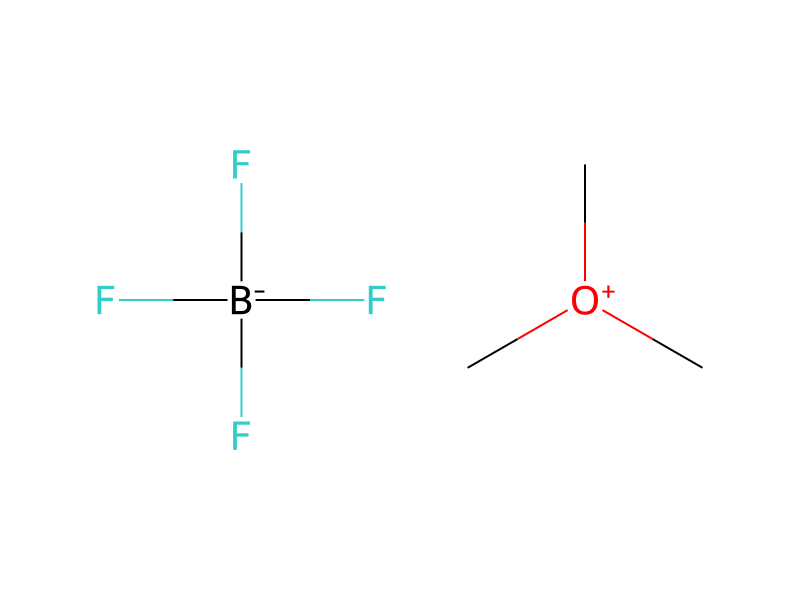
[C:1]1([C:7]2[N:11]=[C:10]([CH:12]3[CH2:17][CH2:16][NH:15][C:14](=[O:18])[CH2:13]3)[O:9][N:8]=2)[CH:6]=[CH:5][CH:4]=[CH:3][CH:2]=1.F[B-](F)(F)F.[CH3:24][O+](C)C.C(=O)(O)[O-].[Na+]>ClCCl>[CH3:24][O:18][C:14]1[CH2:13][CH:12]([C:10]2[O:9][N:8]=[C:7]([C:1]3[CH:2]=[CH:3][CH:4]=[CH:5][CH:6]=3)[N:11]=2)[CH2:17][CH2:16][N:15]=1Participants
5
Reactant 3


Product 1

Reagents, catalysts & solvents 1

Procedure
Add 4-(3-phenyl-1,2,4-oxadiazol-5-yl)piperidin-2-one (1.0 g, 4.11 mmol) to a solution of trimethyloxonium tetrafluoroborate (1.06 g, 6.99 mmol) in dichloromethane (8.2 mL) at 0° C. Stir the reaction overnight at room temperature and pour into an ice cold solution of saturated aqueous sodium bicarbonate. Separate and extract the aqueous layer with additional dichloromethane. Combine the organic layers, dry over anhydrous sodium sulfate, filter, and concentrate under reduced pressure to afford the title compound as a crystalline white solid (0.96 g). 1H NMR (CDCl3) δ 1.9 (m, 1H), 2.17 (m, 1H), 2.65-2.72 (m, 2H), 3.43 (m, 1H), 3.58 (m, 1H), 3.7 (s, 3H), 3.75 (m, 1H), 7.43-7.53 (m, 3H), 8.0-8.1 (m, 2H).
Workup
- customthe reaction overnight at room temperature
- customSeparate
- extractionextract the aqueous layer with additional dichloromethane
- dry with materialdry over anhydrous sodium sulfate
- filtrationfilter
- concentrationconcentrate under reduced pressure
Sources & evidence
- ORD record
- ord-2ac9168016f5497bb282e124f0365db3
- Source dataset
- uspto-grants-2013_11
- Patent number
- US08592590B2
Reaction notes
Loading…