Dimethyl Sulfate → 2,6-Dimethylpyridine-4-carbonitrile
Reaction equation

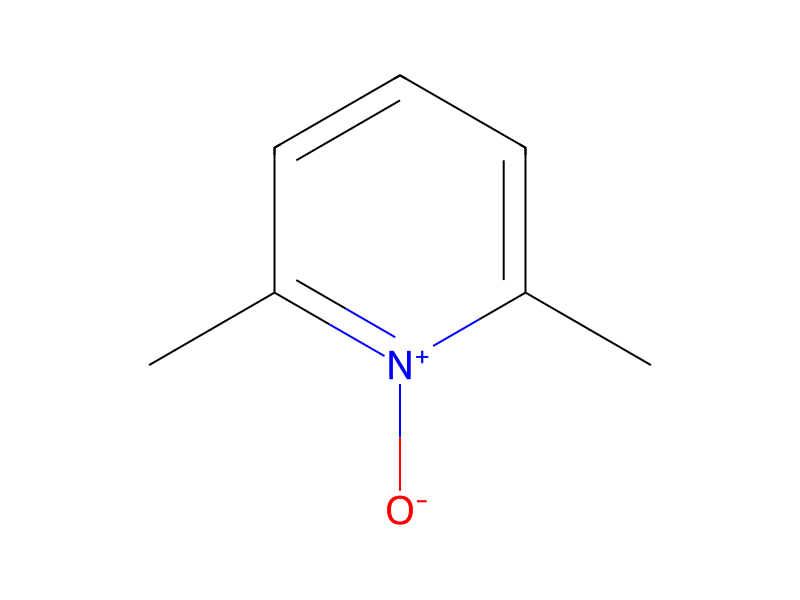
[N+:1]1([O-])[C:2]([CH3:8])=[CH:3][CH:4]=[CH:5][C:6]=1[CH3:7].S(OC)(OC)(=O)=O.COS([O-])(=O)=O.CO[N+:25]1C(C)=CC=C[C:26]=1C.[C-]#N.[K+]>O>[CH3:7][C:6]1[CH:5]=[C:4]([CH:3]=[C:2]([CH3:8])[N:1]=1)[C:26]#[N:25]Participants





Conditions
- Temperature
- 80 °C
Procedure
To a stirred quantity of 2,6-lutidine-1-oxide (12.3 g, 100 mmol) was slowly added dimethyl sulphate (12.6 g, 100 mmol) at such a rate that the temperature of the reaction mixture was maintained at 80° C. throughout the addition. When the addition was complete (about one hour) the solution was stirred at that temperature for an additional 2 h. The salt crystallised upon cooling and was recrystallised from anhydrous acetone giving white prisms; m.p 96-97° C. Yield 18 g (73%). To a solution of this 1-methoxy-2,6-dimethylpyridinium methyl sulphate (11.65 g, 50 mmol) dissolved in water (50 ml), under nitrogen, was added a solution of potassium cyanide (10 g, 150 mmol) dissolved in 50 ml of water. The solution was allowed to stand at room temperature for 2 days at which time the nitrile, which had separated from the solution as long white needles, was removed by filtration, yielding 2.8 g of pure product (42%) δH (CDCl3, 500 MHz) 2.44 (6 H, s, 2×CH3), 4.2 (2 H, d, J 5, NHCH2), 6.78 (2 H, s, ArH); δC (CDCl3, 500 MHz) 157.83 (2×C), 122.71 (C), 118.2 (2×CH), 24.28 (2×CH3)
Workup
- additionWhen the addition
- custom(about one hour)
- customThe salt crystallised
- temperatureupon cooling
- customwas recrystallised from anhydrous acetone giving white prisms
- customm.p 96-97° C
- waitto stand at room temperature for 2 days at which time
- customthe nitrile, which had separated from the solution as long white needles
- customwas removed by filtration
Sources & evidence
- ORD record
- ord-35aa45da56aa4a378bd2ab4b73beb92a
- Source dataset
- uspto-grants-2013_11
- Patent number
- US08592581B2
Reaction notes
Loading…