Tyramine → HCID 54459467, compound
Reaction equation

[NH2:1][CH2:2][CH2:3][C:4]1[CH:9]=[CH:8][C:7]([OH:10])=[CH:6][CH:5]=1.[Cl:11][C:12]1[CH:13]=[C:14]([CH:18]=[CH:19][CH:20]=1)[C@H:15]1[O:17][CH2:16]1>CS(C)=O>[Cl:11][C:12]1[CH:13]=[C:14]([CH:18]=[CH:19][CH:20]=1)[C@@H:15]([OH:17])[CH2:16][NH:1][CH2:2][CH2:3][C:4]1[CH:9]=[CH:8][C:7]([OH:10])=[CH:6][CH:5]=1Participants
4
Reactant 2
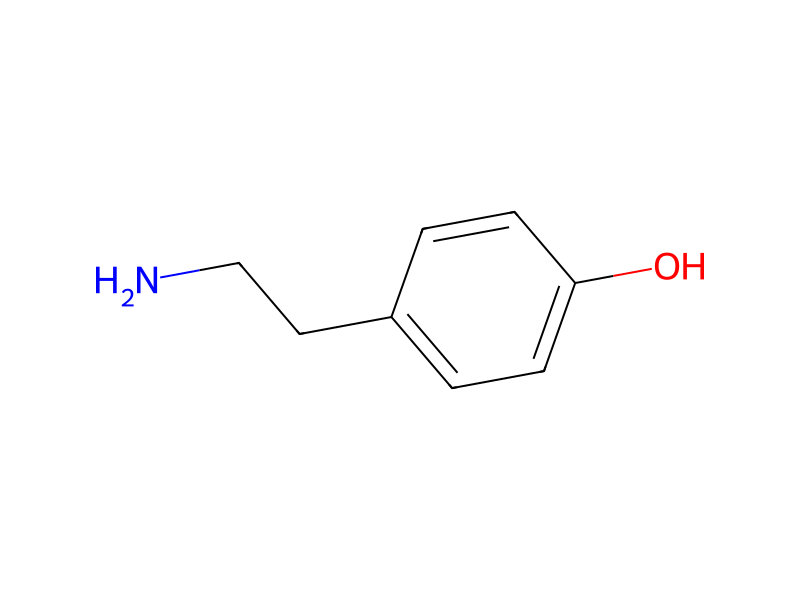

Product 1

Reagents, catalysts & solvents 1

Procedure
Thus, for the preparation of the amine starting material in Example 11 hereinafter, tyramine was reacted with (R)-m-chloro-styrene oxide in DMSO while heating to give (R)-m-chloro-[[(p-hydroxyphenethyl)amino]methyl]benzyl alcohol and the latter was etherified by reaction with 2-ethoxyethylmethanesulphonate to give (R)-m-chloro-α-[[[(p-(2 -ethoxyethoxy)phenethyl]amino]methyl]benzyl alcohol, [α]20/D=-20° (c=0.5 in methanol).
Workup
- temperaturewhile heating
Sources & evidence
- ORD record
- ord-83f59cfc1faf408eb49a781b0789d93b
- Source dataset
- uspto-grants-1991_05
- Patent number
- US05017619
Reaction notes
Loading…