Nitric Acid → o-Benzylbenzoic acid
Reaction equation

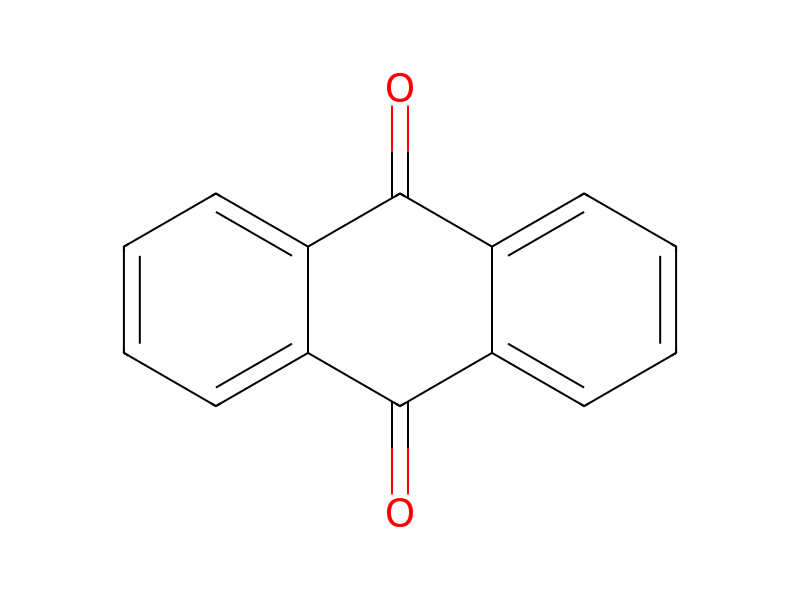
[N+]([O-])(O)=O.S(=O)(=O)(O)[OH:6].[CH:10]1[C:23]2[C:22](=O)[C:21]3[C:16](=[CH:17][CH:18]=[CH:19][CH:20]=3)[C:15](=[O:25])[C:14]=2[CH:13]=[CH:12][CH:11]=1>>[CH2:22]([C:23]1[CH:10]=[CH:11][CH:12]=[CH:13][C:14]=1[C:15]([OH:25])=[O:6])[C:21]1[CH:20]=[CH:19][CH:18]=[CH:17][CH:16]=1Participants



Procedure
A known process involves the oxidation of mixtures of o- and p-benzyl-toluene with dilute nitric acid under pressure at temperatures of 135°-200° C. The reaction mixture is treated with concentrated sulfuric acid to effect the conversion of the o-benzolyl-benzoic acid to anthraquinone; the residual p-benzoyl-benzoic acid is extracted with a soda solution (Acta Chem. Scand. 9, 177-178, 1955; Chem. Abstr. 1956, 4080i). There is no discussion of the purity of the product, in particular with reference to the considerable quantities of nitration by-products. Repetition of the known process lead to the discovery that o-benzyl toluene is unusually susceptible to nitration during the oxidation process with nitric acid. If the oxidation is carried out in the known manner with nitric acid under pressure, only a small amount of the desired o-benzyl-benzoic acid is produced; the reaction product consists primarily of nitration products, in particular nitro-o-benzoyl benzoic acids. For this reason, it is not possible to obtain a pure anthraquinone in good yield with this procedure. If the resultant raw product is treated with sulfuric acid at elevated temperatures, the solution becomes black from the dissociation of the nitro compounds.
Workup
- customat temperatures of 135°-200° C
- extractionthe residual p-benzoyl-benzoic acid is extracted with a soda solution (Acta Chem. Scand. 9, 177-178, 1955; Chem. Abstr. 1956, 4080i)
Sources & evidence
- ORD record
- ord-4fcda6f630854ddca19175a7791be3c5
- Source dataset
- uspto-grants-1980_01
- Patent number
- US04185024
Reaction notes
Loading…