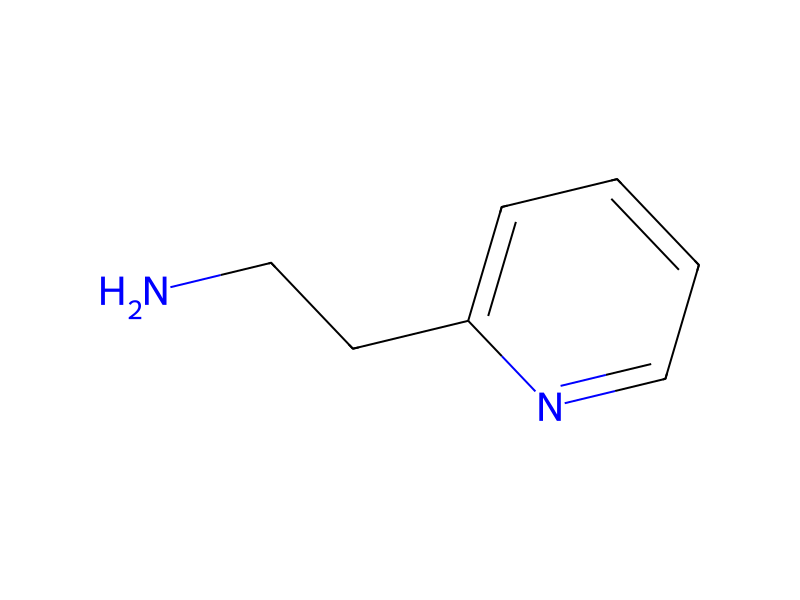
2-Pyridineethanamine → HCID 178518120, compound
Reaction equation

CS[C:3]1[S:4]/[C:5](=[CH:9]\[C:10]2[CH:11]=[C:12]3[C:17](=[CH:18][CH:19]=2)[N:16]=[CH:15][CH:14]=[CH:13]3)/[C:6](=[O:8])[N:7]=1.[N:20]1[CH:25]=[CH:24][CH:23]=[CH:22][C:21]=1[CH2:26][CH2:27][NH2:28].CCN(C(C)C)C(C)C>>[N:20]1[CH:25]=[CH:24][CH:23]=[CH:22][C:21]=1[CH2:26][CH2:27][NH:28][C:3]1[S:4]/[C:5](=[CH:9]\[C:10]2[CH:11]=[C:12]3[C:17](=[CH:18][CH:19]=2)[N:16]=[CH:15][CH:14]=[CH:13]3)/[C:6](=[O:8])[N:7]=1Participants
4



Procedure
Similar procedure as described in example 1b was used, starting from 2-methylsulfanyl-5-[1-quinolin-6-yl-meth-(Z)-ylidene]-thiazol-4-one, 2-pyridin-2-yl-ethylamine and DIEA to give 2-(2-pyridin-2-yl-ethylamino)-5-[1-quinolin-6-yl-meth-(Z)-ylidene]-thiazol-4-one. LC-MS m/e 361 (MH+).
Sources & evidence
- ORD record
- ord-31b67819d01f4e9398463ba7d1c53047
- Source dataset
- uspto-grants-2008_02
- Patent number
- US07326786B2
Reaction notes
Loading…