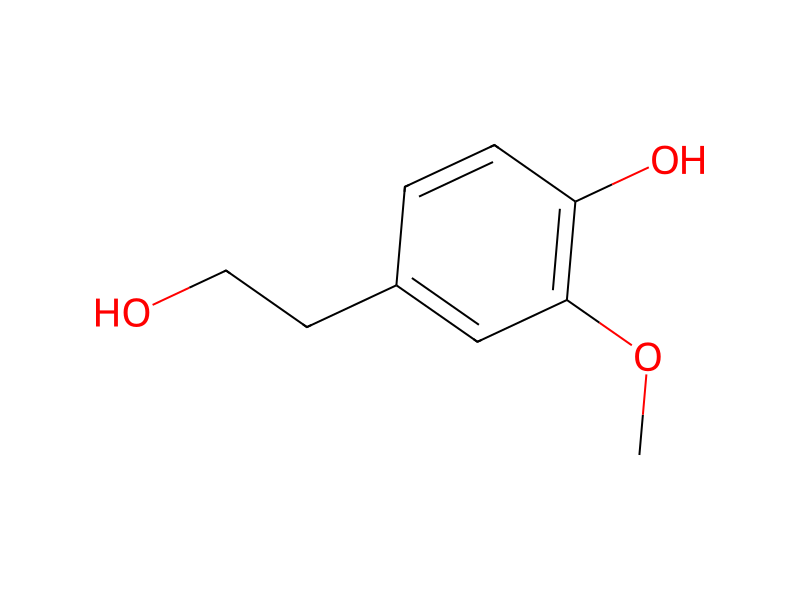
Homovanillyl alcohol → HCID 69203622, compound
Reaction equation

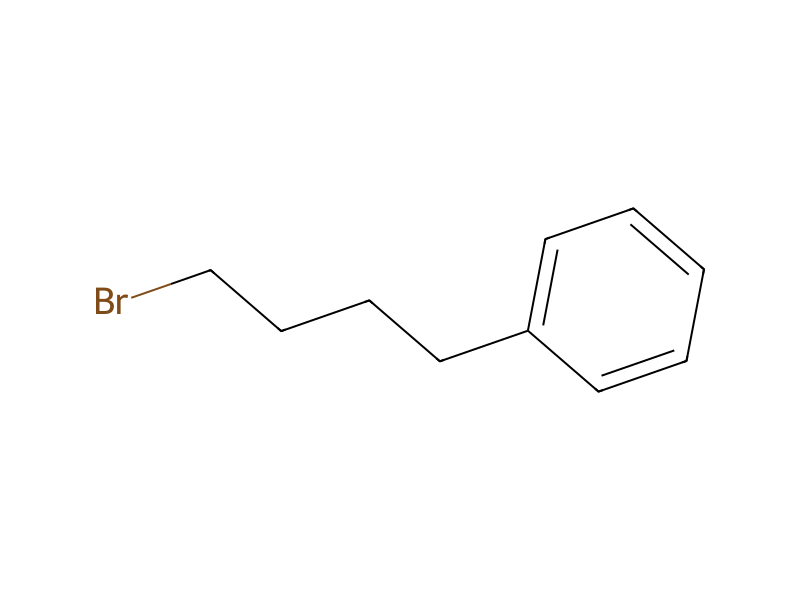
[CH2:1]([OH:12])[CH2:2][C:3]1[CH:11]=[CH:10][C:8]([OH:9])=[C:5]([O:6][CH3:7])[CH:4]=1.O(C)[Na].Br[CH2:17][CH2:18][CH2:19][CH2:20][C:21]1[CH:26]=[CH:25][CH:24]=[CH:23][CH:22]=1>CO.C1COCC1>[CH3:7][O:6][C:5]1[CH:4]=[C:3]([CH2:2][CH2:1][OH:12])[CH:11]=[CH:10][C:8]=1[O:9][CH2:17][CH2:18][CH2:19][CH2:20][C:21]1[CH:26]=[CH:25][CH:24]=[CH:23][CH:22]=1Participants
6
Reactant 3

Product 1

Reagents, catalysts & solvents 2


Procedure
To a solution of homovanillyl alcohol (10 g, 59.3 mmol) in dry methanol (140 ml), there is added 12 ml of 1N NaOCH3 in methanol. After addition of a solution of 1-bromo-4-phenylbutane (12.6 g, 59.3 mmol) in THF (10 ml) the reaction mixture is kept at reflux for 3 hours. After cooling the reaction is quenched with saturated aqueous NaHCO3 and extracted with ethyl acetate (2 times, 500 ml each). The organic layer is dried over MgSO4 and the solvent is removed by evaporation. The crude residue is then purified on silica gel using ethyl acetate/n-hexane (1/1) as mobile phase.
Workup
- temperatureat reflux for 3 hours
- temperatureAfter cooling the reaction
- customis quenched with saturated aqueous NaHCO3
- extractionextracted with ethyl acetate (2 times, 500 ml each)
- dry with materialThe organic layer is dried over MgSO4
- customthe solvent is removed by evaporation
- customThe crude residue is then purified on silica gel
Sources & evidence
- ORD record
- ord-51cd0c2816dc44f4b05eafb67ad91eaf
- Source dataset
- uspto-grants-2008_02
- Patent number
- US07326801B2
Reaction notes
Loading…