Pyridine → HCID 3004969, compound
Reaction equation

N1C=CC=CC=1.[C:7]12([C:17](Cl)=[O:18])[CH2:16][CH:11]3[CH2:12][CH:13]([CH2:15][CH:9]([CH2:10]3)[CH2:8]1)[CH2:14]2.[C:20]1([NH:26][C:27](=[S:30])[NH:28][NH2:29])[CH:25]=[CH:24][CH:23]=[CH:22][CH:21]=1>C(Cl)Cl>[C:7]12([C:17]([NH:29][NH:28][C:27]([NH:26][C:20]3[CH:21]=[CH:22][CH:23]=[CH:24][CH:25]=3)=[S:30])=[O:18])[CH2:16][CH:11]3[CH2:12][CH:13]([CH2:15][CH:9]([CH2:10]3)[CH2:8]1)[CH2:14]2Participants
5
Reactant 3


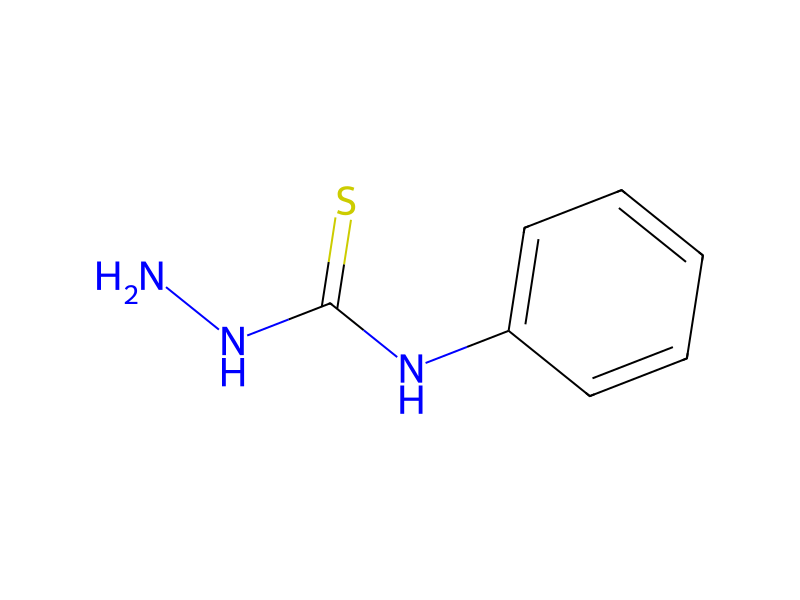
Product 1

Reagents, catalysts & solvents 1

Procedure
Pyridine (0.808 mL, 10 mmol) was added dropwise at room temperature to a stirred solution of 1-adamantanecarbonyl choride (A) (1 g, 5 mmol) and 4-phenyl-3-thiosemicarbazide (B) (0.845 g, 5.05 mmol) in CH2Cl2 (10 mL). After stirring for 4 h, the solvent was removed in vacuo, and the residue washed with water and dried to give 1-(1-adamantylcarbonyl)-4-phenyl thiosemicarbazide (C).
Workup
- customthe solvent was removed in vacuo
- washthe residue washed with water
- customdried
Sources & evidence
- ORD record
- ord-de3ff8c1095744d1a745daaffa8036aa
- Source dataset
- uspto-grants-2008_02
- Patent number
- US07329683B2
Reaction notes
Loading…