Hydrochloric Acid → Dimethyl-2,5-bis[(4-bromophenyl)amino]cyclohexa-1,4-diene-1,4-dicarboxylate
Reaction equation

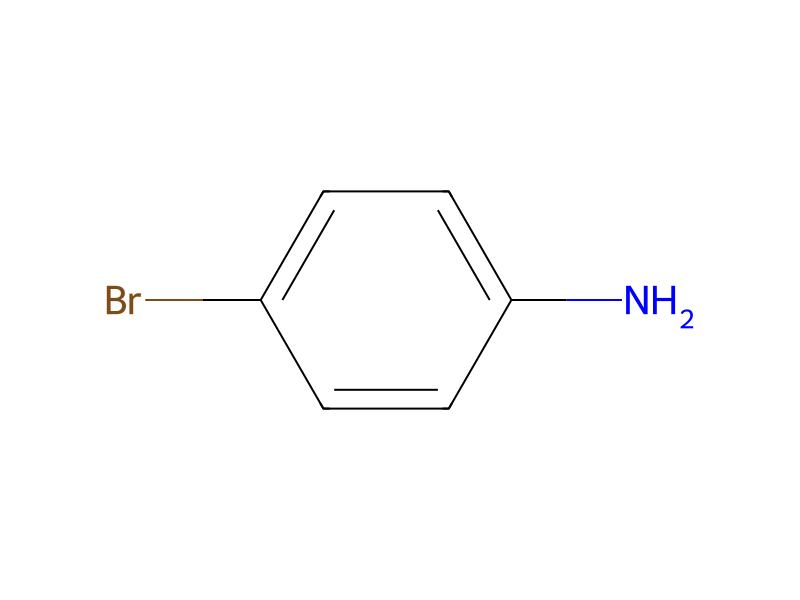
[CH3:1][O:2][C:3]([CH:5]1[C:11](=O)[CH2:10][CH:9]([C:13]([O:15][CH3:16])=[O:14])[C:7](=O)[CH2:6]1)=[O:4].[Br:17][C:18]1[CH:24]=[CH:23][C:21]([NH2:22])=[CH:20][CH:19]=1.Cl>CO>[Br:17][C:18]1[CH:24]=[CH:23][C:21]([NH:22][C:7]2[CH2:6][C:5]([C:3]([O:2][CH3:1])=[O:4])=[C:11]([NH:22][C:21]3[CH:23]=[CH:24][C:18]([Br:17])=[CH:19][CH:20]=3)[CH2:10][C:9]=2[C:13]([O:15][CH3:16])=[O:14])=[CH:20][CH:19]=1Participants
5




Procedure
Dimethyl 1,4-cyclohexanedione-2,5-dicarboxylate (4.56 gm; 20 mmol) and methanol (100 ml) were heated to boiling, then 4-bromoaniline (6.88 gm; 40 mmol) was added followed by conc. hydrochloric acid (200 μl). The mixture was refluxed for 5 hours under a nitrogen atmosphere. On cooling a cream solid precipitated out which was collected by filtration, washed with methanol and dried under vacuum to give 10.18 gm (95%) of dimethyl 2,5-bis{(4-bromophenyl)amino}cyclohexa-1,4-diene-1,4-dicaboxylate.
Workup
- temperatureThe mixture was refluxed for 5 hours under a nitrogen atmosphere
- temperatureOn cooling a cream solid
- customprecipitated out which
- filtrationwas collected by filtration
- washwashed with methanol
- customdried under vacuum
Sources & evidence
- ORD record
- ord-26672ec426fd436fa9e16a441925733c
- Source dataset
- uspto-grants-2008_02
- Patent number
- US07335771B2
Reaction notes
Loading…