Azanylidyneoxidanium → Phenol
Reaction equation

N#[O+:2].[O-]O.[C:5]1([CH:11]([CH3:13])[CH3:12])[CH:10]=[CH:9][CH:8]=[CH:7][CH:6]=1>>[C:5]1([OH:2])[CH:10]=[CH:9][CH:8]=[CH:7][CH:6]=1.[CH3:13][C:11]([C:5]1[CH:10]=[CH:9][CH:8]=[CH:7][CH:6]=1)=[CH2:12].[C:11]([C:5]1[CH:10]=[CH:9][CH:8]=[CH:7][CH:6]=1)(=[O:2])[CH3:13].[CH3:12][C:11]([OH:2])([CH3:13])[C:5]1[CH:10]=[CH:9][CH:8]=[CH:7][CH:6]=1Participants
6



Procedure
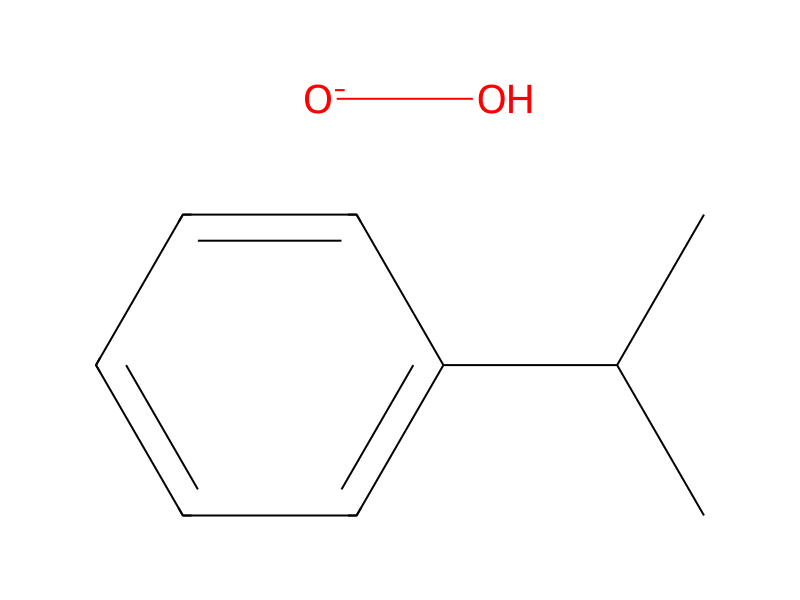
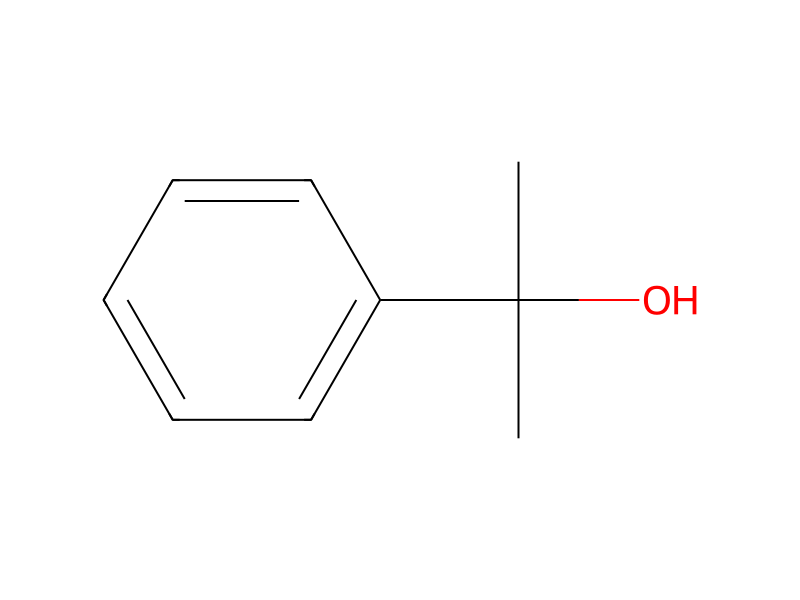
In this example 0.01 g. (455 ppm.) of nitrosonium hexachlorostibnate was added to the cumene hydroperoxide. The temperature rose to a maximum temperature of 90° C. and after five minutes the products were removed for analysis. The reaction resulted in a selectivity of 84 percent to phenol, 13 percent to alpha-methylstyrene, 3 percent to acetophenone and one percent to dimethylbenzyl alcohol.
Workup
- customthe products were removed for analysis
Sources & evidence
- ORD record
- ord-c01b5d1a262e4310a9af530f0269440c
- Source dataset
- uspto-grants-1980_07
- Patent number
- US04210607
Reaction notes
Loading…