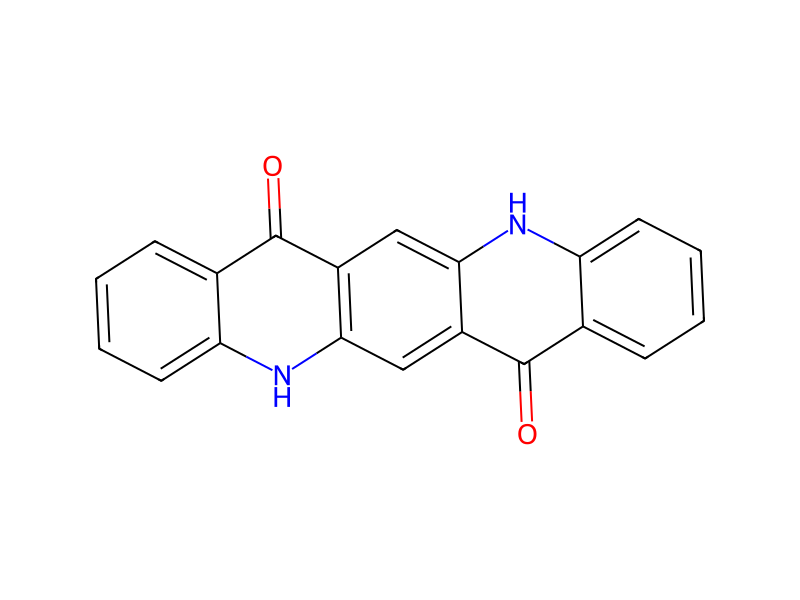
Phosphorus oxide (P4O10) → Quinacridone
Reaction equation

[NH:1]([C:8]1[CH:16]=[C:15]([C:17](O)=[O:18])[C:14]([NH:20][C:21]2[CH:26]=[CH:25][CH:24]=[CH:23][CH:22]=2)=[CH:13][C:9]=1[C:10](O)=[O:11])[C:2]1[CH:7]=[CH:6][CH:5]=[CH:4][CH:3]=1.O=P12OP3(OP(OP(O3)(O1)=O)(=O)O2)=O>>[CH:24]1[CH:25]=[C:26]2[C:17]([C:15]3[C:14]([NH:20][C:21]2=[CH:22][CH:23]=1)=[CH:13][C:9]1[C:10]([C:7]2[C:2]([NH:1][C:8]=1[CH:16]=3)=[CH:3][CH:4]=[CH:5][CH:6]=2)=[O:11])=[O:18]Participants
3


Procedure
3 Parts by weight of 2,5-dianilino-terephthalic acid are added while stirring to 9 parts by weight of acidic polyphosphoric acid methyl ester having a P2O5 content of from 81.5 to 82.5%, at a temperature of from 120° to 125° C., thereby effecting condensation to yield the linear quinacridone. The cyclized molten product is hydrolyzed in 30 parts by weight of water. The precipitated crude quinacridone is filtered off and washed until free of acid.
Workup
- customof from 120° to 125° C.
- customcondensation
Sources & evidence
- ORD record
- ord-5c88fe8febca42c7a0764f7caf6597e1
- Source dataset
- uspto-grants-1980_07
- Patent number
- US04212975
Reaction notes
Loading…