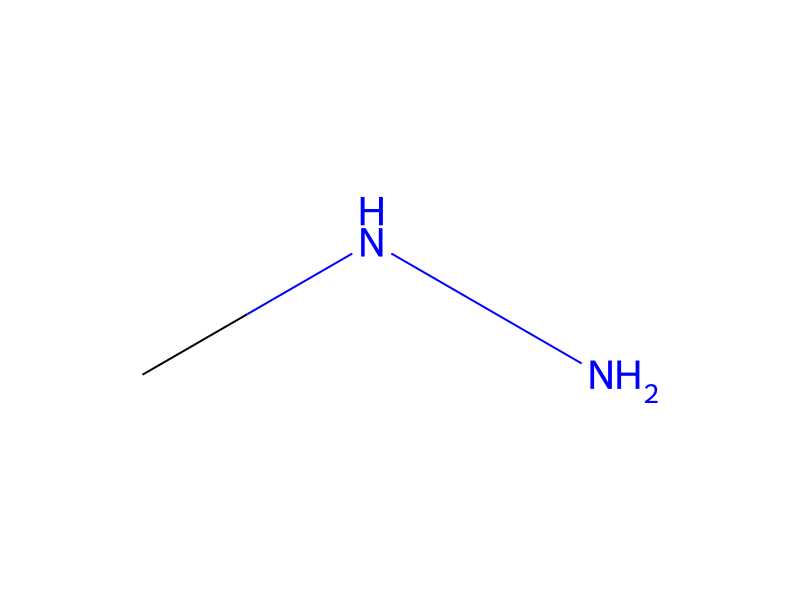
Methylhydrazine → HCID 54199411, compound
Reaction equation

[CH3:1][NH:2][NH2:3].CN(C)C=O.[C:9]([N:11]=[C:12](SC)[NH:13][CH2:14][CH2:15][CH2:16][O:17][C:18]1[CH:23]=[CH:22][CH:21]=[C:20]([CH2:24][N:25]2[CH2:29][CH2:28][CH2:27][CH2:26]2)[CH:19]=1)#[N:10]>C1(C)C=CC=CC=1>[CH3:1][N:2]1[C:12]([NH:13][CH2:14][CH2:15][CH2:16][O:17][C:18]2[CH:23]=[CH:22][CH:21]=[C:20]([CH2:24][N:25]3[CH2:26][CH2:27][CH2:28][CH2:29]3)[CH:19]=2)=[N:11][C:9]([NH2:10])=[N:3]1Participants
5
Reactant 3


Product 1

Reagents, catalysts & solvents 1

Procedure
Methyl hydrazine (6.9 g) and dry dimethylformamide (10.95 g) were heated at reflux in toluene for 1 hr. N'-Cyano-N-[3-[3-(1-pyrrolidinylmethyl)phenoxy]propyl]carbamimidothioic acid, methyl ester (10 g) was then added and the mixture heated at reflux for 5 hr. Evaporation of the solvent gave the title compound as a yellow oil which was converted to the fumarate salt in ethanol. The title compound was regenerated as the free base with aqueous sodium carbonate, and extracted into ethyl acetate. Evaporation of the solvent and trituration of the residue with light petroleum (b.p. 60°-80°) gave the title compound as a white solid (3.4 g) m.p. 95°-95.5°. TLC silica; methanol:0.88 ammonia (80:1) single spot Rf 0.5.
Workup
- temperaturethe mixture heated
- temperatureat reflux for 5 hr
- customEvaporation of the solvent
Sources & evidence
- ORD record
- ord-695cd384d8ac4d76bc858592a67c464a
- Source dataset
- uspto-grants-1982_03
- Patent number
- US04318913
Reaction notes
Loading…