Formaldehyde → HCID 131712689, compound
Reaction equation

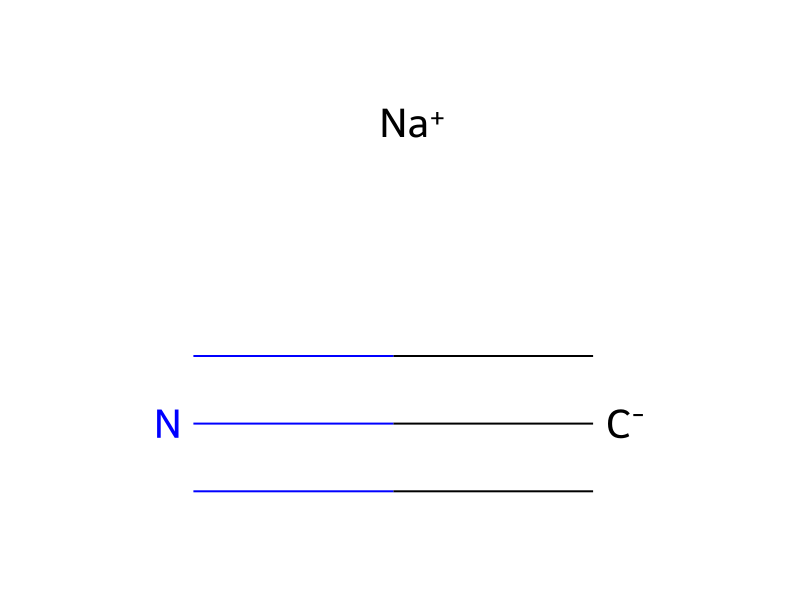
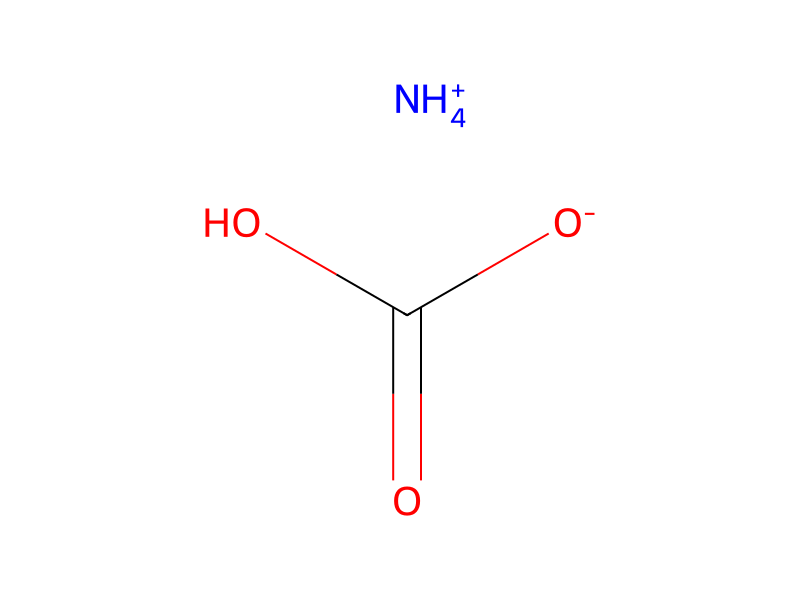
[C:1](=[O:4])(O)[O-:2].[NH4+:5].[O-2].[Mg+2:7].[C-:8]#N.[Na+].C=O>O>[C:1](=[O:4])([O-:2])[NH2:5].[NH2:5][CH2:8][C:1]([OH:2])=[O:4].[Mg+2:7].[C:1](=[O:4])([O-:2])[NH2:5]Participants
Reactant 4


Product 1

Reagents, catalysts & solvents 1

Procedure
To a 250 ml Erlenmeyer flask was added 7.9 g (0.1 mole) ammonium bicarbonate, 2.01 g (0.05 mole) magnesium oxide, 100 ml distilled water, 4.9 g (0.1 mole) sodium cyanide. The mixture was stirred and 8.1 g (0.1) mole of a 37% solution of formaldehyde was added dropwise over 2 minutes. The mixture was stirred and let stand overnight. Then an additional 50 ml of water was added and 2.0 g magnesium oxide while carbon dioxide was bubbled through the mixture. A total of 11.5 g of carbon dioxide was added. The mixture was filtered and the filtrate evaporated to near dryness on a hot plate. A crude product of magnesium glycine carbamate was obtained (11.52 g) having an alkalinity value of 694 and containing 6.2% magnesium, 855 ppm calcium, 1.7% sodium and 9.8% nitrogen.
Workup
- stirringThe mixture was stirred
- custom2.0 g magnesium oxide while carbon dioxide was bubbled through the mixture
- additionA total of 11.5 g of carbon dioxide was added
- filtrationThe mixture was filtered
- customthe filtrate evaporated
Sources & evidence
- ORD record
- ord-80594a1488914b4fb62591286b67881a
- Source dataset
- uspto-grants-1982_03
- Patent number
- US04320015
Reaction notes
Loading…