Diethyl Malonate → Diethyl 2-vinylcyclopropane-1,1-dicarboxylate
Reaction equation

[OH-].[K+].[CH2:3](Cl)/[CH:4]=[CH:5]/[CH2:6]Cl.[C:9]([O:17][CH2:18][CH3:19])(=[O:16])[CH2:10][C:11]([O:13][CH2:14][CH3:15])=[O:12]>CCCCCCCC[N+](CCCCCCCC)(CCCCCCCC)C.[Cl-].O>[CH:4]([CH:5]1[CH2:6][C:10]1([C:11]([O:13][CH2:14][CH3:15])=[O:12])[C:9]([O:17][CH2:18][CH3:19])=[O:16])=[CH2:3]Participants
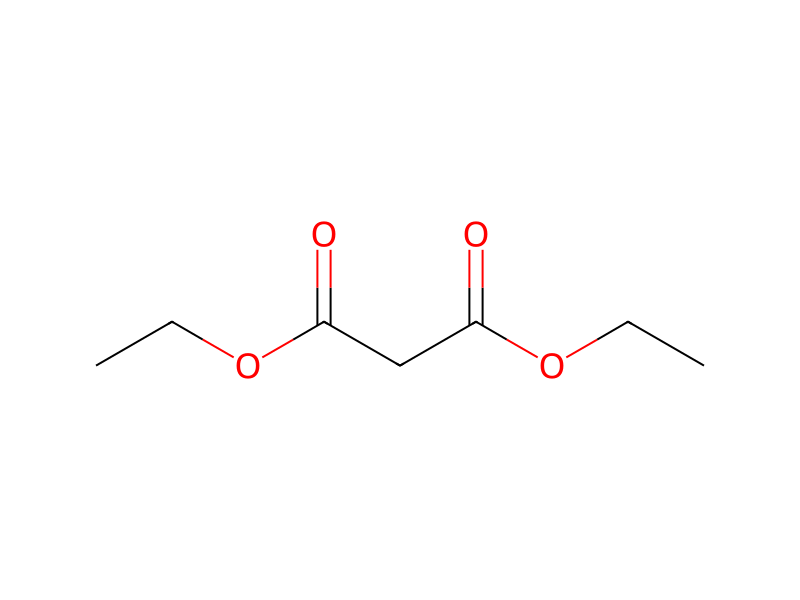




Procedure
An aqueous solution (50%) of potassium hydroxide (168 g) was added dropwise to a vigorously stirred solution of 125 g (1.0 mol) trans 1,4-dichlorobutene-2, 80 g (0.5 mol) diethyl malonate and 3.2 g tricaprylmethylammonium chloride while maintaining the temperature at 25°-30° C. When the addition was complete, the mixture was stirred at ambient temperature for five hours and water then added to dissolve suspended salts. After separation of the phases followed by washing of the aqueous phase three times with ethyl ether, the organic portion was distilled to obtain 21.3 g diethyl 2-vinylcyclopropane-1,1-dicarboxylate. Bp 64°-66° C. (0.15 mm); nD27° 1.4512; [lit. bp 69°-72° C. (0.5 mm); nD19° 1.4528]. Infrared and proton nmr spectra were also consistent with the desired compound.
Workup
- temperaturewhile maintaining the temperature at 25°-30° C
- additionWhen the addition
- dissolutionto dissolve
- customAfter separation of the phases
- washby washing of the aqueous phase three times with ethyl ether
- distillationthe organic portion was distilled
Sources & evidence
- ORD record
- ord-0ce41249a1da44f9a431eca5e3efeece
- Source dataset
- uspto-grants-1982_03
- Patent number
- US04321406
Reaction notes
Loading…